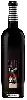
Winery ValdelaciervaGarnacha
 Red wine


In the mouth this red wine is a powerful with a nice balance between acidity and tannins.
This wine generally goes well with poultry, beef or game (deer, venison).

Taste structure of the Garnacha from the Winery Valdelacierva
Light | Bold | |
Smooth | Tannic | |
Dry | Sweet | |
Soft | Acidic |
In the mouth the Garnacha of Winery Valdelacierva in the region of Rioja is a powerful with a nice balance between acidity and tannins.
Food and wine pairings with Garnacha
Pairings that work perfectly with Garnacha



Original food and wine pairings with Garnacha


The Garnacha of Winery Valdelacierva matches generally quite well with dishes of beef, pasta or lamb such as recipes of family potluck, cannelloni au gratin stuffed with bolognese sauce or lamb tagine with apricots.
Details and technical informations about Winery Valdelacierva's Garnacha.
Discover the grape variety: Villard
Simple whites or reds with a pale golden or deep ruby hue, a supple palate with moderate acidity and understated fruity aromas with discreet hybrid notes. Disease-resistant. Now marginal, they survive in a few heritage plots in France and bear witness to the post-phylloxera hybridisations of the first half of the 20th century. Synonym for the Villard Blanc and Villard Noir varieties, French hybrids obtained by Bertille Seyve in Bourgoin-Jallieu.
Last vintages of this wine
The best vintages of Garnacha from Winery Valdelacierva are 2016, 0, 2017
Informations about the Winery Valdelacierva
The Winery Valdelacierva is one of of the world's greatest estates. It offers 21 wines for sale in the of Rioja to come and discover on site or to buy online.

The wine region of Rioja
Star of great Spanish reds: signature Tempranillo, elegant and complex, with notes of ripe cherry, plum, leather, vanilla and tobacco from American oak ageing. Classification by age: fruity Joven, balanced Crianza, ample Reserva, deep, silky Gran Reserva (5 years, 2 in barrel). Some fresh Viura whites and generous rosés. Spain's first DOCa (1991), 3 sub-zones (Alta, Alavesa, Oriental), 93.
The word of the wine: Tears
Traces left by the wine on the sides of the glass when it is shaken or tilted.