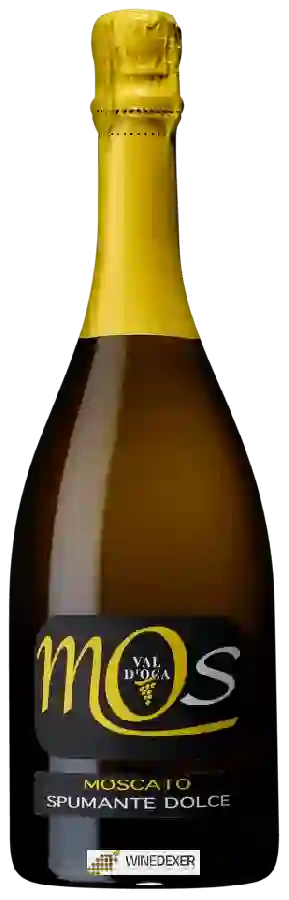
Winery Val d'OcaMos Moscato Spumante Dolce
 Sparkling wine


This wine generally goes well with sweet desserts
The Mos Moscato Spumante Dolce of the Winery Val d'Oca is in the top 70 of wines of Veneto.

Food and wine pairings with Mos Moscato Spumante Dolce
Pairings that work perfectly with Mos Moscato Spumante Dolce

Original food and wine pairings with Mos Moscato Spumante Dolce
The Mos Moscato Spumante Dolce of Winery Val d'Oca matches generally quite well with dishes of sweet desserts such as recipes of the coughing cat's apple crumble.
Details and technical informations about Winery Val d'Oca's Mos Moscato Spumante Dolce.
Discover the grape variety: Cabernet-Jura
Coloured, structured reds with a deep ruby robe, firm tannins and fresh acidity, showing aromas of blackcurrant, blackberry, red pepper, spices, herbs and balsamic notes evoking cabernet sauvignon. Disease-resistant interspecific variety (mildew and powdery mildew), driving force of organic vineyards in northern Europe: Switzerland, Germany, Belgium, Netherlands, UK and Denmark. Hybrid created in the 1990s by Valentin Blattner in Soyhières (Swiss Jura).
Last vintages of this wine
The best vintages of Mos Moscato Spumante Dolce from Winery Val d'Oca are 2019, 0
Informations about the Winery Val d'Oca
The Winery Val d'Oca is one of of the world's greatest estates. It offers 42 wines for sale in the of Veneto to come and discover on site or to buy online.

The wine region of Veneto
World star of Prosecco: fresh, light Glera sparklers with notes of pear, green apple and white flowers, fruity, convivial bubbles. Veronese reds from Corvina and Rondinella: light, crisp Bardolino, fruity Valpolicella, opulent, concentrated Amarone DOCG (black cherry, chocolate, raisin) from dried grapes. Mineral, almondy Soave (Garganega) whites, fresh Pinot Grigio. 97,500 ha, Italy's largest production.
The word of the wine: Slim
A thin wine, lacking flesh and body.