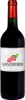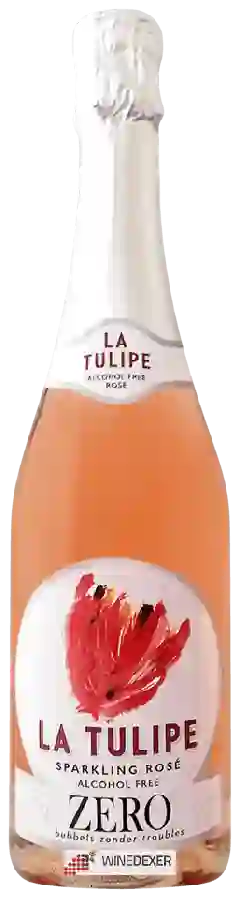
Château La Tulipe de La GardeZero Sparkling Rosé
 Sparkling wine



This wine generally goes well with beef, lamb or mature and hard cheese.

Food and wine pairings with Zero Sparkling Rosé
Pairings that work perfectly with Zero Sparkling Rosé



Original food and wine pairings with Zero Sparkling Rosé

The Zero Sparkling Rosé of Château La Tulipe de La Garde matches generally quite well with dishes of beef, lamb or spicy food such as recipes of monkfish armorican style, bitumen leg of lamb or baked sea bream.
Details and technical informations about Château La Tulipe de La Garde's Zero Sparkling Rosé.
Discover the grape variety: Alvina
Simple, fresh dry whites with a pale golden colour, a supple palate with moderate acidity and understated aromas of citrus and white flowers. Discreet rustic profile. Preserved in a few ampelographic collections, it belongs to the heritage varieties whose commercial diffusion has almost disappeared and which are studied for their genetic interest. Rare, poorly documented white variety cultivated in negligible quantities.
Last vintages of this wine
The best vintages of Zero Sparkling Rosé from Château La Tulipe de La Garde are 2019
Informations about the Château La Tulipe de La Garde
The Château La Tulipe de La Garde is one of of the world's great estates. It offers 56 wines for sale in the of Languedoc to come and discover on site or to buy online.

The wine region of Languedoc
Sunny, generous southern reds: spicy, peppery Syrah, round, candied Grenache (ripe fruit, garrigue), deep Mourvèdre, structured Carignan, supple Cinsault. From robust Corbières and Minervois to fresher Terrasses du Larzac, via Faugères on schist or taut Pic Saint-Loup. Lively, iodised Picpoul de Pinet whites (oysters), ample Roussanne and Marsanne. 14 sub-appellations, ~10,000 ha in regional AOC.
The wine region of Languedoc-Roussillon
Largest single French vineyard, dominated by sunny, generous reds. Spicy Syrah, candied Grenache (ripe fruit, garrigue), structured Carignan, deep Mourvèdre, supple Cinsault. Stars: structured Corbières, Minervois, Faugères, Saint-Chinian; round Côtes-du-Roussillon. Legendary vins doux naturels: Banyuls and Maury (fortified Grenache) with notes of cocoa, fig, prune.
The word of the wine: Unbalanced
Said of a wine whose different elements are not perceived in a harmonious and pleasant way. This is not necessarily a defect, it can be a wine that is too young and not yet blended.