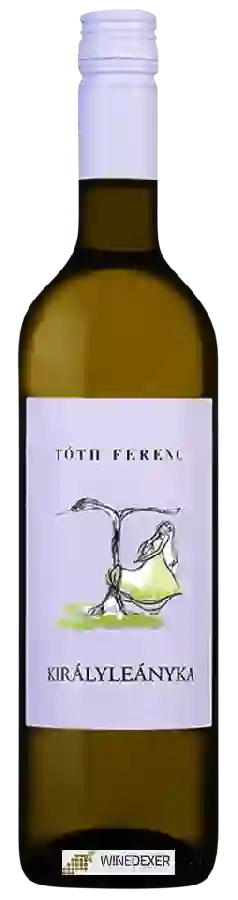
Winery Toth FerencKirályleányka
 White wine


This wine generally goes well with

Details and technical informations about Winery Toth Ferenc's Királyleányka.
Discover the grape variety: Roussanne
Aromatic and elegant whites, rich yet lifted by fine freshness, with hawthorn, honeysuckle, apricot, pear, honey, green tea, mineral and herbal notes. Fine ageing potential. Key variety in the great whites of the northern Rhône (Hermitage, Crozes-Hermitage, Saint-Joseph, Saint-Péray) blended with marsanne, and one of the 13 permitted grapes at Châteauneuf-du-Pape. Native Rhône variety.
Last vintages of this wine

The best vintages of Királyleányka from Winery Toth Ferenc are 2015, 0, 2017, 2014 and 2018.
Informations about the Winery Toth Ferenc
The Winery Toth Ferenc is one of of the world's greatest estates. It offers 41 wines for sale in the of Eger to come and discover on site or to buy online.

The wine region of Eger
Emblematic Hungarian region in the north, home of the legendary Egri Bikavér ("Bull's Blood"). A blend of fleshy, spicy reds with signature notes of black cherry, ripe plum, paprika, sweet spices and tobacco, round tannins. Mandatory base of Kékfrankos (Blaufränkisch), blended with fruity Kadarka, peppery Cabernet Franc and supple Merlot. Also Egri Csillag in white ("Star of Eger"), fresh and aromatic.
The word of the wine: Aggressive
Said of a wine with excessive, biting and unpleasant acidity.