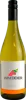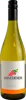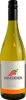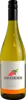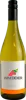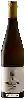
Winery TornaiOlaszrizling
 White wine


This wine generally goes well with vegetarian, poultry or mature and hard cheese.
Food and wine pairings with Olaszrizling
Pairings that work perfectly with Olaszrizling



Original food and wine pairings with Olaszrizling
The Olaszrizling of Winery Tornai matches generally quite well with dishes of mature and hard cheese, vegetarian or poultry such as recipes of leek, bacon and beaufort pie, salmon and goat cheese quiche or pad thai.
Details and technical informations about Winery Tornai's Olaszrizling.
Discover the grape variety: Ortega
An intraspecific cross between Müller-Thurgau and Siegerrebe obtained in 1948 by Hans Breider (1908-1960) at the Bavarian Research Station for Viticulture and Horticulture in Veitsnöchheim (Germany). Almost unknown in France, it can be found in Germany, Belgium, England, the United States and Canada. Its early maturity and muscatel taste have sometimes led to it being offered as a table grape on market stalls.
Last vintages of this wine
The best vintages of Olaszrizling from Winery Tornai are 2017, 2018, 2015, 0
Informations about the Winery Tornai
The Winery Tornai is one of of the world's great estates. It offers 33 wines for sale in the of Hungary to come and discover on site or to buy online.

The wine region of Hungary
Hungary, in Central Europe, has gained its reputation in the wine world through just a couple of wine styles, but for centuries it has been a wine-producing nation of considerable diversity. In addition to the Sweet wines of Tokaj and the Deep Bull's Blood of Eger, the Hungarian wine portfolio includes Dry whites from the shores of Lake Balaton, Somló and Neszmély, and finer reds from various regions, notably Villány, Sopron and Szekszard. Hungarian wine culture stretches back to Roman times and has survived numerous political, religious and economic challenges, including Islamic rule during the 16th Century (when Alcohol was prohibited) and the Phylloxera epidemic of the late 1800s. The modern Hungarian wine regions are distributed around the country.
The word of the wine: Deposit
Solid particles that can naturally coat the bottom of a bottle of wine. It is rather a guarantee that the wine has not been mistreated: in fact, to avoid the natural deposit, rather violent processes of filtration or cold passage (- 7 or - 8 °C) are used in order to precipitate the tartar (the small white crystals that some people confuse with crystallized sugar: just taste to dissuade you from it)