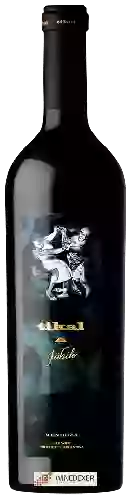
The Winery Tikal of Mendoza

The Winery Tikal is one of the best wineries to follow in Mendoza.. It offers 7 wines for sale in of Mendoza to come and discover on site or to buy online.
Looking for the best Winery Tikal wines in Mendoza among all the wines in the region? Check out our tops of the best red, white or effervescent Winery Tikal wines. Also find some food and wine pairings that may be suitable with the wines from this area. Learn more about the region and the Winery Tikal wines with technical and enological descriptions.
How Winery Tikal wines pair with each other generally quite well with dishes of beef, lamb or game (deer, venison) such as recipes of beef tongue in hot pickle sauce, ghormeh sabzi (iranian herbed lamb stew) or rabbit with mustard, thyme and cream.
On the nose the red wine of Winery Tikal. often reveals types of flavors of cherry, oaky or earthy and sometimes also flavors of blackberry, tobacco or vanilla. In the mouth the red wine of Winery Tikal. is a powerful.
World capital of Malbec: powerful, deep reds with blackberry, plum, violet and sweet spice, round tannins and vivid fruit. Also firm Cabernet Sauvignon, supple, juicy Bonarda, aromatic floral white Torrontés. High-altitude vineyards (800-1,700 m) at the foot of the Andes, dry continental climate irrigated by glacial waters. ~80% of Argentine output across 150,000 ha.
Star sub-regions: Luján de Cuyo, Maipú, Valle de Uco. Fleshy, sun-filled wines.
Planning a wine route in the of Mendoza? Here are the wineries to visit and the winemakers to meet during your trip in search of wines similar to Winery Tikal.
Supple, fruity reds with an intense ruby colour, soft tannins and a generous palate, showing signature aromas of red fruits (cherry, raspberry), plum, soft spices and floral notes. Often made as frizzante (lightly sparkling), a festive and approachable style. Star of Oltrepò Pavese and Colli Piacentini. A name shared by several distinct varieties: the indigenous Piedmontese Bonarda (not to be confused with Bonarda from Argentina, which is actually Charbono).