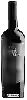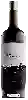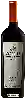
Winery Tierra del MarWinemaker Selection Cabernet Sauvignon
 Red wine


In the mouth this red wine is a powerful with a nice balance between acidity and tannins.
This wine generally goes well with poultry, beef or lamb.
Taste structure of the Winemaker Selection Cabernet Sauvignon from the Winery Tierra del Mar
Light | Bold | |
Smooth | Tannic | |
Dry | Sweet | |
Soft | Acidic |
In the mouth the Winemaker Selection Cabernet Sauvignon of Winery Tierra del Mar in the region of Canelones is a powerful with a nice balance between acidity and tannins.
Food and wine pairings with Winemaker Selection Cabernet Sauvignon
Pairings that work perfectly with Winemaker Selection Cabernet Sauvignon



Original food and wine pairings with Winemaker Selection Cabernet Sauvignon
The Winemaker Selection Cabernet Sauvignon of Winery Tierra del Mar matches generally quite well with dishes of beef, lamb or poultry such as recipes of beef tagine with prunes and almonds, lamb parmentine with eggplant and spices or cannelloni of meat.
Details and technical informations about Winery Tierra del Mar's Winemaker Selection Cabernet Sauvignon.
Discover the grape variety: Cabernet-Sauvignon
Cabernet-Sauvignon noir is a grape variety that originated in France (Bordeaux). It produces a variety of grape specially used for wine making. It is rare to find this grape to eat on our tables. This variety of grape is characterized by small bunches, and small grapes. Cabernet-Sauvignon noir can be found in many vineyards: South-West, Loire Valley, Languedoc & Roussillon, Cognac, Bordeaux, Armagnac, Rhone Valley, Provence & Corsica, Savoie & Bugey, Beaujolais.
Last vintages of this wine
The best vintages of Winemaker Selection Cabernet Sauvignon from Winery Tierra del Mar are 2018, 0
Informations about the Winery Tierra del Mar
The Winery Tierra del Mar is one of of the world's greatest estates. It offers 9 wines for sale in the of Canelones to come and discover on site or to buy online.

The wine region of Canelones
The Canelones administrative department, Northeast of the Uruguayan capital of Montevideo, is home to the majority of Uruguay's Vineyards and accounts for aRound 60 percent of all wine produced in the country. It Lies in the South of the small South American country, where the majority of vines are planted, inland from the Atlantic coast and the Rio de la Plata estuary. The region itself covers a broad arc approximately 50km (30 miles) Deep, drawn clockwise from the northwestern outskirts of Montevideo round to the coastline east of the capital city. The eponymous administrative capital of the region lies 50km (31 miles) to the north of Montevideo.
The word of the wine: Passerillage
Concentration of the grape by drying out, under the influence of wind or sun, as opposed to botrytisation, which is the concentration obtained by the development of the "noble rot" for which Botrytis cinerea is responsible. The word is mainly used for sweet wines.