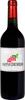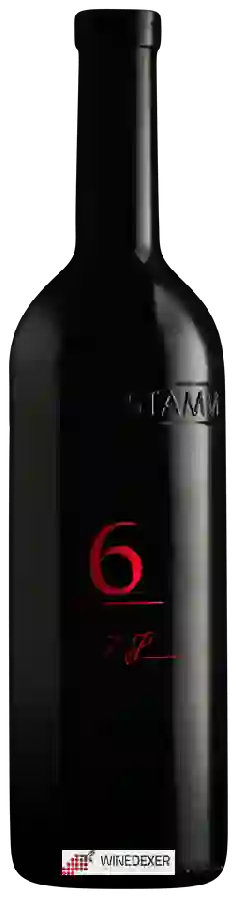
Winery Stamm6 Rot
 Red wine



This wine is a blend of 2 varietals which are the Cabernet franc and the Merlot.
This wine generally goes well with pork, poultry or beef.

Food and wine pairings with 6 Rot
Pairings that work perfectly with 6 Rot



Original food and wine pairings with 6 Rot


The 6 Rot of Winery Stamm matches generally quite well with dishes of beef, pork or game (deer, venison) such as recipes of american fillet (belgian-style beef tartar), ollada (catalonia) or rabbit with chorizo.
Details and technical informations about Winery Stamm's 6 Rot.
Discover the grape variety: Cabernet franc
Supple, fragrant reds with fine tannins and vibrant freshness, showing raspberry, violet, green pepper, pencil lead and gentle spice aromas. Star of the Loire as a single variety (Chinon, Bourgueil, Saumur-Champigny) and of the right bank of Bordeaux in blends (Cheval Blanc at 60%). Also in semi-dry Anjou rosés. A historic Bordeaux variety, parent of Cabernet-Sauvignon, Merlot and Carmenère.
Last vintages of this wine
The best vintages of 6 Rot from Winery Stamm are 0, 2015
Informations about the Winery Stamm
The Winery Stamm is one of of the world's greatest estates. It offers 62 wines for sale in the of Schaffhausen to come and discover on site or to buy online.

The wine region of Schaffhausen
Wine canton of northern German-speaking Switzerland, nicknamed "Blauburgunderland". Signature Pinot Noir (Blauburgunder, 60-70%): fine, silky reds with signature notes of cherry, raspberry, undergrowth, sweet spices and a chalky mineral touch, delicate tannins and taut freshness — compared to fine village Burgundies. Klettgau is the flagship sub-region. Müller-Thurgau whites (local Riesling-Silvaner) lively and fruity (apple, citrus).
The word of the wine: Complex
Said of a rich and concentrated wine offering a wide range of aromas and a tasty mouthfeel.