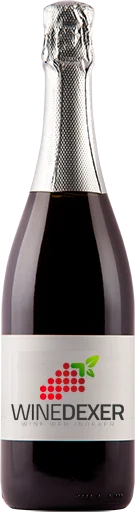
Cave Terra VentouxRosé Brut
 Sparkling wine
This wine generally goes well with beef, lamb or mature and hard cheese.
Food and wine pairings with Rosé Brut
Pairings that work perfectly with Rosé Brut



Original food and wine pairings with Rosé Brut

The Rosé Brut of Cave Terra Ventoux matches generally quite well with dishes of beef, lamb or spicy food such as recipes of harira de mamie (moroccan soup), caramelized lamb mice or chinese noodles with shrimp.
Details and technical informations about Cave Terra Ventoux's Rosé Brut.
Discover the grape variety: Jacquez
A natural French-American ternary hybrid that most certainly comes from an interspecific crossing between an unknown Vinifera with Vitis Aestivalis and Vitis Cinerea. The Jacquez was at the time the most multiplied in the World, present since always in the Portuguese island of Madeira. For a long time used as a direct producer, it was even used as a rootstock in the south of France, in the United States, in Mexico and in South Africa: some vines grafted on Jacquez still exist today. In France, it is one of the six hybrids prohibited since 1935 (included in European regulations): Clinton, Herbemont, Isabelle, Jacquez, Noah and Othello.
Informations about the Cave Terra Ventoux
The Cave Terra Ventoux is one of of the world's great estates. It offers 66 wines for sale in the of Ventoux to come and discover on site or to buy online.

The wine region of Ventoux
The wine region of Ventoux is located in the region of Rhône méridional of Rhone Valley of France. Wineries and vineyards like the Domaine Saint Jean du Barroux or the Château Unang produce mainly wines red, white and pink. The most planted grape varieties in the region of Ventoux are Mourvèdre, Clairette and Roussanne, they are then used in wines in blends or as a single variety. On the nose of Ventoux often reveals types of flavors of cherry, gooseberry or anise and sometimes also flavors of eucalyptus, tropical or pineapple.
The wine region of Rhone Valley
The Rhone Valley is a key wine-producing region in Southeastern France. It follows the North-south course of the Rhône for nearly 240 km, from Lyon to the Rhône delta (Bouches-du-Rhône), near the Mediterranean coast. The Length of the valley means that Rhône wines are the product of a wide variety of soil types and mesoclimates. The viticultural areas of the region cover such a distance that there is a widely accepted division between its northern and southern parts.
The word of the wine: Petiole
Stem of the leaf, connecting the leaf blade to the stem.