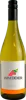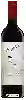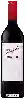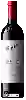
Winery TatachillaGrenache - Mataro
 Red wine
This wine generally goes well with beef and mature and hard cheese.
Food and wine pairings with Grenache - Mataro
Pairings that work perfectly with Grenache - Mataro


Original food and wine pairings with Grenache - Mataro
The Grenache - Mataro of Winery Tatachilla matches generally quite well with dishes of beef or mature and hard cheese such as recipes of feijoada ( portuguese cassoulet ) or parsnip mousse in a glass jar.
Details and technical informations about Winery Tatachilla's Grenache - Mataro.
Discover the grape variety: Himrod
An interspecific cross between ontario (winchell x diamond) and sultana - it is therefore not a pure Vitis vinifera as some people write - created in 1928 by A.B. Stout at the New York State Agricultural Experimental Station (United States). Its multiplication started only in 1952, it is certainly known in the United States but also in Canada, in India, in many European wine-producing countries, ... little multiplied and thus little known in France except by the amateur gardeners. The Interlaken which looks a bit like the Himrod, the Lakemont and the Romulus have the same parents.
Informations about the Winery Tatachilla
The Winery Tatachilla is one of of the world's great estates. It offers 48 wines for sale in the of Australie du Sud to come and discover on site or to buy online.

The wine region of Australie du Sud
SouthAustralia is one of Australia's six states, located (as the name suggests) in the south of the vast island continent. It's the engine room of the Australian wine industry, responsible for about half of the country's total production each year. But there's more to the region than quantity - countless high-quality wines are produced here, most from the region's signature Grape, Shiraz. These include such fine, collectible wines as Penfolds Grange, Henschke Hill of Grace, Torbreck The Laird and d'Arenberg The Dead Arm.
The word of the wine: Draft liquor (champagne)
After blending, the wine is bottled with a liqueur de tirage (a mixture of sugar and wine) and a yeast (selected yeasts). The yeast attacks the sugar and creates carbon dioxide. The fermentation, which lasts about two months, is prolonged by an ageing period (15 months minimum in total). The bottle is capped (some rare vintages are capped with a staple and a cork).