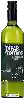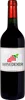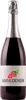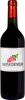
Winery Tapas Y PintxosCabernet
 Red wine


In the mouth this red wine is a powerful with a lot of tannins present in the mouth.
This wine generally goes well with poultry, beef or lamb.

Taste structure of the Cabernet from the Winery Tapas Y Pintxos
Light | Bold | |
Smooth | Tannic | |
Dry | Sweet | |
Soft | Acidic |
In the mouth the Cabernet of Winery Tapas Y Pintxos in the region of Vinos de Pago is a powerful with a lot of tannins present in the mouth.
Food and wine pairings with Cabernet
Pairings that work perfectly with Cabernet



Original food and wine pairings with Cabernet
The Cabernet of Winery Tapas Y Pintxos matches generally quite well with dishes of beef, lamb or poultry such as recipes of beef pot au feu (grandma's style), shoulder of lamb on a bed of potatoes or scandinavian beef balls.
Details and technical informations about Winery Tapas Y Pintxos's Cabernet.
Discover the grape variety: Cabernet-Sauvignon
Structured, tannic reds, deeply coloured, with aromas of blackcurrant, blackberry, cedar, tobacco and graphite, underpinned by firm acidity and fine ageing potential. Cornerstone of the great Médoc estates (Pauillac, Saint-Estèphe, Saint-Julien) and signature of Napa Valley, Coonawarra and Maipo. The world's most planted red variety, a natural cross of Cabernet Franc x Sauvignon Blanc born in Bordeaux.
Last vintages of this wine

The best vintages of Cabernet from Winery Tapas Y Pintxos are 0, 2016, 2015
Informations about the Winery Tapas Y Pintxos
The Winery Tapas Y Pintxos is one of of the world's greatest estates. It offers 6 wines for sale in the of Vinos de Pago to come and discover on site or to buy online.

The wine region of Vinos de Pago
Top of the Spanish quality pyramid (above DOCa and DO), reserved for 25 exceptional estates. Estate wines, grapes and vinification exclusively on site, 10 years of track record. All styles: concentrated, barrel-aged Cabernet, Syrah and Tempranillo reds (Dominio de Valdepusa, Arínzano, Pago de Otazu), maker's blends, a few ambitious whites. Great stylistic freedom.
The word of the wine: Left bank
In Bordeaux, refers to the vineyards located on the left bank of the Gironde, where the dominant grape variety is Cabernet Sauvignon. These are the Medoc, Haut-Médoc, Pessac-Leognan, Graves, etc. appellations.