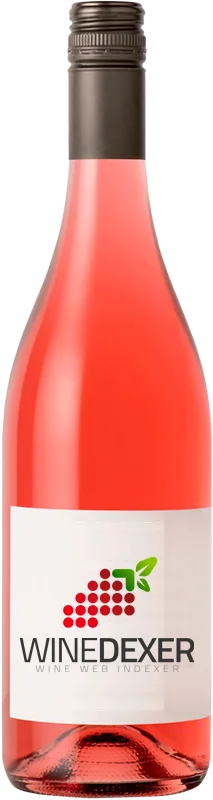
Winery TaklerFlört Rosé
 Pink wine


This wine generally goes well with
Details and technical informations about Winery Takler's Flört Rosé.
Discover the grape variety: Perlaut
A cross between Cinsaut and Csaba pearl obtained in 1956, registered in the Official Catalogue of Table Grape Varieties, list A1.
Last vintages of this wine

The best vintages of Flört Rosé from Winery Takler are 2018, 2017, 0, 2015
Informations about the Winery Takler
The Winery Takler is one of of the world's great estates. It offers 59 wines for sale in the of Szekszárd to come and discover on site or to buy online.

The wine region of Szekszárd
The wine region of Szekszárd is located in the region of Dél-Pannónia of Hungary. Wineries and vineyards like the Domaine Dúzsi Tamás or the Domaine Takler produce mainly wines red, pink and white. The most planted grape varieties in the region of Szekszárd are Merlot, Cabernet franc and Cabernet-Sauvignon, they are then used in wines in blends or as a single variety. On the nose of Szekszárd often reveals types of flavors of cherry, cinnamon or pepper and sometimes also flavors of cocoa, black fruits or black currant.
The wine region of Dél-Pannónia
Hungary/eszak-dunantul/pannonhalma">Pannonhalma is a wine region in north-western Hungary. It constitutes the eastern corner of Transdanubia, the traditional region of Hungary which Lies across the Danube (trans danubia) from the Hungarian capital Budapest. As this corner of Hungary focuses mainly on red wine production, Pannonhalma's vineyards are planted mostly with the Bordeaux wine grapes Cabernet Sauvignon, Cabernet Franc, Merlot, as well as Burgundy's Pinot Noir. Pannonhalma is situated just south-east of Gyor, the regional capital of Gyor-Moson-Sopron county (of which Sopron makes up the western third), and the western Transdanubia region.
The word of the wine: Distinguished
Said of a fine, elegant wine that is outstanding in its category.