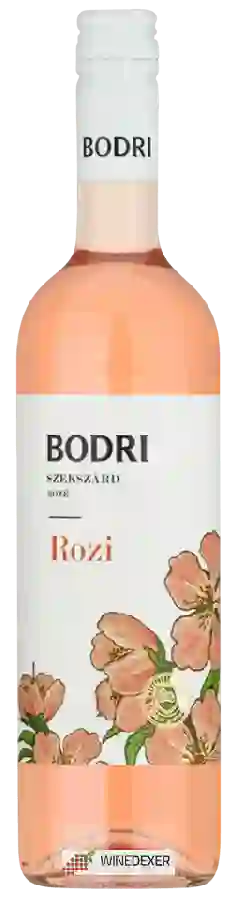
Winery BodriRozi
 Pink wine



This wine generally goes well with pork, vegetarian or poultry.
The Rozi of the Winery Bodri is in the top 90 of wines of Szekszárd.

Wine flavors and olphactive analysis

On the nose the Rozi of Winery Bodri in the region of Dél-Pannónia often reveals types of flavors of earth, red fruit or tropical fruit.
Food and wine pairings with Rozi
Pairings that work perfectly with Rozi



Original food and wine pairings with Rozi



The Rozi of Winery Bodri matches generally quite well with dishes of pork, rich fish (salmon, tuna etc) or spicy food such as recipes of beef tagine with vegetables, spaghetti neapolitan style or chicken tagine.
Details and technical informations about Winery Bodri's Rozi.
Discover the grape variety: Riesling
Crystalline, taut whites with vibrant acidity and aromas of citrus, green apple, white flowers, vineyard peach and mineral/petrol notes with age. Made as dry (Trocken, Alsace), off-dry (Kabinett, Spätlese) and sweet (Auslese, Beerenauslese, Trockenbeerenauslese, late harvest). Star of the Moselle, Rheingau, Alsace AOC and Wachau. Also exported to Clare Valley and Finger Lakes.
Last vintages of this wine
The best vintages of Rozi from Winery Bodri are 2017, 2018, 2013, 2015 and 0.
Informations about the Winery Bodri
The Winery Bodri is one of of the world's greatest estates. It offers 55 wines for sale in the of Szekszárd to come and discover on site or to buy online.

The wine region of Szekszárd
Southern Hungarian region, land of velvety, spicy reds. Signature Szekszardi Bikaver (local "Bull's Blood"): a blend of dominant Kekfrankos (Blaufrankisch) and native Kadarka, with signature notes of ripe cherry, plum, paprika, hibiscus, tobacco and sweet spice, velvety tannins and southern roundness — softer and sunnier than Eger's. Also peppery Cabernet Franc and dense Cabernet Sauvignon. Mild Pannonian climate, loess soils over limestone.
The wine region of Dél-Pannónia
Southern Hungary (Pécs, Szekszárd, Villány, Tolna), ~7,800 ha on loess and limestone, continental climate with Mediterranean influences — bastion of great Hungarian reds. Kékfrankos and Kadarka signatures as native red kings: spiced and structured with black cherry, blackberry, plum, paprika, pepper and smoky hint, firm tannins. Ripe Cabernet Franc and Sauvignon in Bordeaux blends at Villány. Specialities Szekszárdi Bikavér and unique Cirfandli white at Pécs (spiced, honeyed).
The word of the wine: Muscat blanc à petits grains
A white grape variety cultivated since antiquity on the shores of the Mediterranean, it is considered the noblest of the muscats. It is mainly used to make sweet wines, often from mutage. In France, it is the sole variety used in many natural sweet wines: muscat-de-frontignan, muscat-de-mireval, muscat-de-lunel, muscat-de-saint-jean-de-minervois, muscat-de-beaumes-de-venise, muscat-du-cap-corse. Combined with Muscat d'Alexandrie, it gives Muscat-de-Rivesaltes. It is also used to make sparkling white wines (clairette-de-die; moscato d'asti and asti spumante in Italy) and dry wines (alsace-muscat). Powerfully aromatic and complex, its wines evoke fresh grapes, roses, exotic fruits, citrus fruits and spices.


