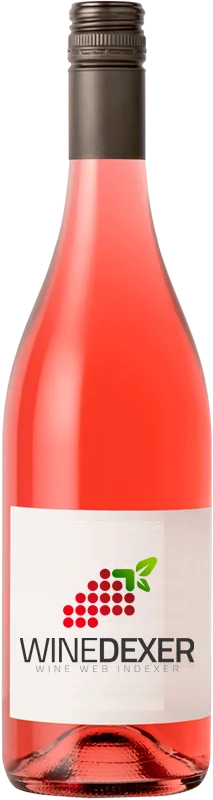
Winery Szent GaálRosé Barrique
 Pink wine
This wine generally goes well with
Details and technical informations about Winery Szent Gaál's Rosé Barrique.
Discover the grape variety: Picolit noir
A very old grape variety, which almost disappeared, cultivated for a very long time in the north-east of Italy, more precisely in the region of Friuli bordering with Aurelia and Slovenia. It can be found in Italy, but also in Spain, ... in France it is completely unknown. Note that it is not related to the white picolit.
Informations about the Winery Szent Gaál
The Winery Szent Gaál is one of of the world's great estates. It offers 33 wines for sale in the of Szekszárd to come and discover on site or to buy online.

The wine region of Szekszárd
The wine region of Szekszárd is located in the region of Dél-Pannónia of Hungary. Wineries and vineyards like the Domaine Dúzsi Tamás or the Domaine Takler produce mainly wines red, pink and white. The most planted grape varieties in the region of Szekszárd are Merlot, Cabernet franc and Cabernet-Sauvignon, they are then used in wines in blends or as a single variety. On the nose of Szekszárd often reveals types of flavors of cherry, cinnamon or pepper and sometimes also flavors of cocoa, black fruits or black currant.
The wine region of Dél-Pannónia
Hungary/eszak-dunantul/pannonhalma">Pannonhalma is a wine region in north-western Hungary. It constitutes the eastern corner of Transdanubia, the traditional region of Hungary which Lies across the Danube (trans danubia) from the Hungarian capital Budapest. As this corner of Hungary focuses mainly on red wine production, Pannonhalma's vineyards are planted mostly with the Bordeaux wine grapes Cabernet Sauvignon, Cabernet Franc, Merlot, as well as Burgundy's Pinot Noir. Pannonhalma is situated just south-east of Gyor, the regional capital of Gyor-Moson-Sopron county (of which Sopron makes up the western third), and the western Transdanubia region.
The word of the wine: Elegant
Said of a wine that, beyond balance, presents qualities of charm and harmony, without the slightest heaviness.