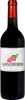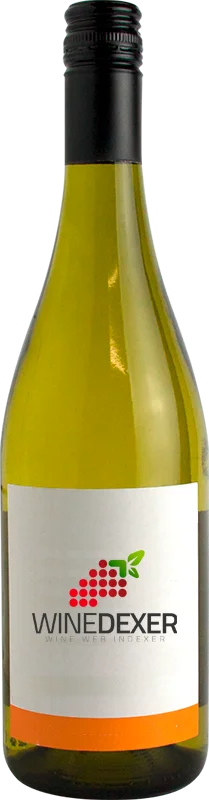
Stiftsweingut Frank MeyerMeyer's Cuvée Weiss
 White wine
This wine is a blend of 3 varietals which are the Kerner, the Riesling and the Scheurebe.
This wine generally goes well with pork, vegetarian or poultry.
Food and wine pairings with Meyer's Cuvée Weiss
Pairings that work perfectly with Meyer's Cuvée Weiss



Original food and wine pairings with Meyer's Cuvée Weiss



The Meyer's Cuvée Weiss of Stiftsweingut Frank Meyer matches generally quite well with dishes of pork, rich fish (salmon, tuna etc) or shellfish such as recipes of filet mignon in a crust, spaghetti neapolitan style or mussels with rosemary and barbecue.
Discover the grape variety: Kerner
Intraspecific crossing between frankenthal and riesling obtained in Germany in 1929 by August Karl Herold (1902/1973). In 1951 and by crossing it with the sylvaner, we obtained the juwel. It should be noted that there is a mutation of Kerner, discovered in 1974 and bearing the name of kernling, with grapes of pink-grey to red-grey colour at full maturity. Kerner can be found in Germany, Belgium, Slovenia, Austria, Switzerland, Italy, South Africa, Australia, the United States, Canada, Japan... practically unknown in France except in a few Moselle vineyards.
Informations about the Stiftsweingut Frank Meyer
The Stiftsweingut Frank Meyer is one of of the world's great estates. It offers 41 wines for sale in the of Pfalz to come and discover on site or to buy online.

The wine region of Pfalz
Pfalz is a key wine producing region in western Germany, located between the Rhein/Rhine river and the low-lying Haardt mountain range (a natural continuation of the Alsatian Vosges). It covers a rectangle of land 45 miles (75km) Long and 15 miles (25km) wide. To the NorthLiesRheinhessen; to the South, the French border and Alsace. In terms of both quality and quantity, Pfalz is one of Germany's most important regions, and one which shows great promise for the future.
The word of the wine: pH
Short for "hydrogen potential", the pH is a parameter that defines whether a medium is acidic or basic. A high pH gives a soft wine, a very low pH translates into a wine that is too acidic.