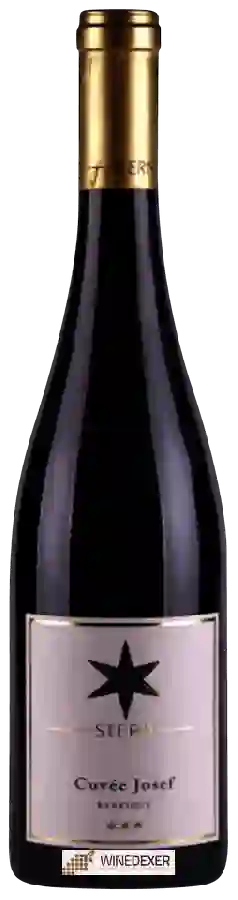
Winery SternCuvée Josef Barrique
 Red wine


This wine is a blend of 2 varietals which are the Cabernet-Sauvignon and the Merlot.
This wine generally goes well with poultry, beef or game (deer, venison).

Wine flavors and olphactive analysis


On the nose the Cuvée Josef Barrique of Winery Stern in the region of Pfalz often reveals types of flavors of oak, black fruit.
Food and wine pairings with Cuvée Josef Barrique
Pairings that work perfectly with Cuvée Josef Barrique



Original food and wine pairings with Cuvée Josef Barrique


The Cuvée Josef Barrique of Winery Stern matches generally quite well with dishes of beef, lamb or game (deer, venison) such as recipes of mexican beef tacos, languedoc-roussillon lamb en papillote and its tajine with... or duck breast with goat cheese and local ham.
Details and technical informations about Winery Stern's Cuvée Josef Barrique.
Discover the grape variety: Cabernet-Sauvignon
Structured, tannic reds, deeply coloured, with aromas of blackcurrant, blackberry, cedar, tobacco and graphite, underpinned by firm acidity and fine ageing potential. Cornerstone of the great Médoc estates (Pauillac, Saint-Estèphe, Saint-Julien) and signature of Napa Valley, Coonawarra and Maipo. The world's most planted red variety, a natural cross of Cabernet Franc x Sauvignon Blanc born in Bordeaux.
Last vintages of this wine

The best vintages of Cuvée Josef Barrique from Winery Stern are 2016, 2014, 2013, 0 and 2015.
Informations about the Winery Stern
The Winery Stern is one of of the world's greatest estates. It offers 58 wines for sale in the of Pfalz to come and discover on site or to buy online.

The wine region of Pfalz
Fleshy, dry, fruity Riesling is the region's signature: yellow peach, apricot, ripe citrus, lovely mineral tension. Germany's largest red-wine area (40%), with silky Spätburgunder showing red fruit and spice, darker structured Dornfelder, supple Portugieser. Some rounded Pinot Blanc and Pinot Gris. A 23,640 ha vineyard along the Haardt, among Germany's warmest (>2,000 h of sun).
The word of the wine: Reassembly
During the vinification process, a "cap" is formed at the top of the vats with the solid parts (skin, pulp, pips, etc.), which contain tannins and colouring elements. Pumping over consists of emptying the vat from the bottom and pouring the juice back to the top, in order to mix the cap and the juice and to favour the exchange and the extraction. This old technique allows a better exchange between the solid parts and the liquid.


