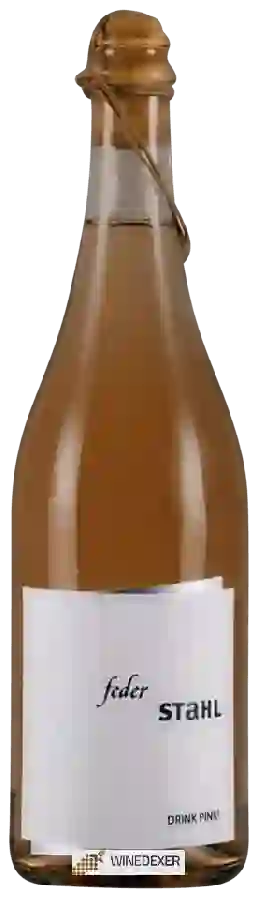
Winery StahlFeder Drink Pink!
 Sparkling wine



This wine is a blend of 2 varietals which are the Riesling and the Scheurebe.
This wine generally goes well with pork, vegetarian or poultry.
Food and wine pairings with Feder Drink Pink!
Pairings that work perfectly with Feder Drink Pink!



Original food and wine pairings with Feder Drink Pink!



The Feder Drink Pink! of Winery Stahl matches generally quite well with dishes of pork, rich fish (salmon, tuna etc) or spicy food such as recipes of leek, goat cheese and bacon quiche, fresh tuna with sesame seeds or red mullet, mackerel, tuna, salmon sushi.
Discover the grape variety: Riesling
White Riesling is a grape variety that originated in France (Alsace). It produces a variety of grape specially used for the elaboration of wine. It is rare to find this grape to eat on our tables. This variety of grape is characterized by small bunches, and small grapes. White Riesling can be found in many vineyards: Alsace, Loire Valley, Languedoc & Roussillon, Lorraine, Provence & Corsica, Rhone Valley, Savoie & Bugey, Beaujolais, South West.
Last vintages of this wine
The best vintages of Feder Drink Pink! from Winery Stahl are 0
Informations about the Winery Stahl
The Winery Stahl is one of of the world's great estates. It offers 72 wines for sale in the of Franken to come and discover on site or to buy online.

The wine region of Franken
Franken, or Franconia in English, is a wine-growing region in the northwest of Germany's historic state of Bavaria. Though Bavaria may be more famous for its beer, Franken boasts a proud viticultural tradition and is one of the most unique regions in the country. There are just over 6,100 hectares (15,073 ac) of vines Planted in Franken and around 80 percent of these are white Grape varieties. Here, Riesling plays second fiddle to the often overlooked Silvaner and Müller-Thurgau.
The word of the wine: Filtration
Clarification of the wine using filters.