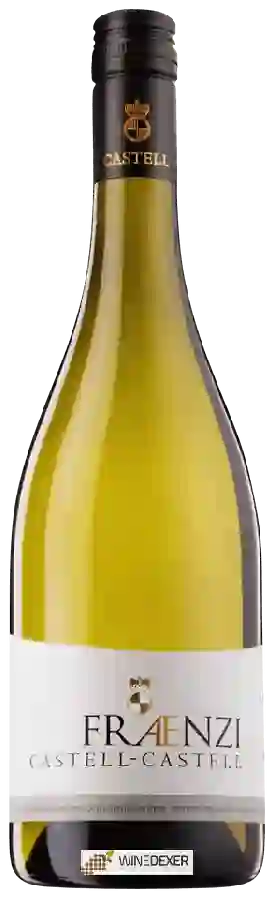
Winery CastellCastell-Castell Fraenzi
 Sparkling wine



This wine is a blend of 3 varietals which are the Kerner, the Müller-Thurgau and the Scheurebe.
This wine generally goes well with poultry, lean fish or shellfish.

Food and wine pairings with Castell-Castell Fraenzi
Pairings that work perfectly with Castell-Castell Fraenzi



Original food and wine pairings with Castell-Castell Fraenzi


The Castell-Castell Fraenzi of Winery Castell matches generally quite well with dishes of shellfish, spicy food or poultry such as recipes of lobster tail armorican style, couscous or chakchouka.
Details and technical informations about Winery Castell's Castell-Castell Fraenzi.
Discover the grape variety: Kerner
Aromatic, structured whites with lively acidity and a slender mouth, featuring muscat-like aromas of white peach, apricot, white flowers, citrus and Riesling-like notes. Made as nervy dry wines (Trocken), off-dry (Kabinett, Spätlese) and mineral high-altitude cuvées. Grown in Germany (Rheinhessen, Palatinate, Württemberg), northern Italy (Alto Adige in the high Val Venosta valleys) and Japan. A Trollinger × Riesling cross created in 1929 in Weinsberg.
Informations about the Winery Castell
The Winery Castell is one of of the world's greatest estates. It offers 89 wines for sale in the of Franken to come and discover on site or to buy online.

The wine region of Franken
Homeland of German Silvaner: dry, straight, mineral and lively whites with notes of green apple, citrus, fresh herbs and a saline touch, planted here for over 350 years (1,500 ha, a quarter of the vineyard). Also supple, floral Müller-Thurgau, taut Riesling, aromatic Bacchus. Some discreet reds (Spätburgunder). 6,040 ha in Bavaria along the Main around Würzburg, red sandstone and shell-limestone soils.
The word of the wine: Vitis vinifera
The main species of vine cultivated in Europe and throughout the world, the origin of most of the great grape varieties.


