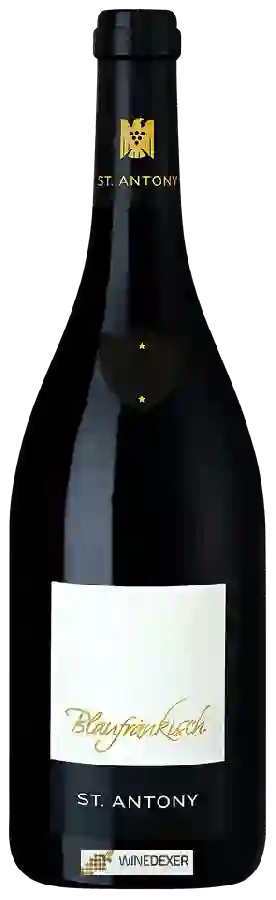
Winery St. AntonyBlaufränkisch
 Red wine



This wine generally goes well with pork, rich fish (salmon, tuna etc) or mature and hard cheese.

Wine flavors and olphactive analysis


On the nose the Blaufränkisch of Winery St. Antony in the region of Rheinhessen often reveals types of flavors of spices.
Food and wine pairings with Blaufränkisch
Pairings that work perfectly with Blaufränkisch



Original food and wine pairings with Blaufränkisch
The Blaufränkisch of Winery St. Antony matches generally quite well with dishes of pork, rich fish (salmon, tuna etc) or mature and hard cheese such as recipes of zucchini lasagna, round zucchini stuffed with tuna or country-style sausage.
Details and technical informations about Winery St. Antony's Blaufränkisch.
Discover the grape variety: Courbu
Structured and aromatic dry or sweet whites with a pale golden hue, an ample palate with preserved acidity and signature aromas of yellow fruits (apricot, peach), citrus, white flowers and honeyed notes in the sweet style. A component of Jurançon AOC, Pacherenc du Vic-Bilh AOC and Béarn AOC blends, it defines the aromatic richness of Béarn whites. French autochthonous variety from the South-West, mainly grown in Béarn and Madiran.
Last vintages of this wine
The best vintages of Blaufränkisch from Winery St. Antony are 2011, 2015, 2016, 0 and 2017.
Informations about the Winery St. Antony
The Winery St. Antony is one of of the world's greatest estates. It offers 57 wines for sale in the of Rheinhessen to come and discover on site or to buy online.

The wine region of Rheinhessen
71% white region: Riesling is king (5,000 ha), dry to off-dry, ripe yellow fruit, apple, citrus and fine saline minerality. Supple, floral Müller-Thurgau for everyday, the world's largest Silvaner plantation with herbaceous, straight notes. Historic cradle of off-sweet Liebfraumilch. Some supple reds (Dornfelder, Spätburgunder).
The word of the wine: Cellar master
The cellar master is the technical manager of a winery (usually a professional oenologist), who presides over and oversees the wine-making process and its maturation. Unlike an oenologist in a wine laboratory, who intervenes on an ad hoc basis to assist the winemaker, the cellar master is part of the estate's technical team.


