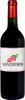
Winery St. AntoniusConquistador
 Red wine
In the mouth this red wine is a powerful.
This wine generally goes well with poultry, beef or veal.
Taste structure of the Conquistador from the Winery St. Antonius
Light | Bold | |
Smooth | Tannic | |
Dry | Sweet | |
Soft | Acidic |
In the mouth the Conquistador of Winery St. Antonius in the region of Valence is a powerful.
Food and wine pairings with Conquistador
Pairings that work perfectly with Conquistador



Original food and wine pairings with Conquistador

The Conquistador of Winery St. Antonius matches generally quite well with dishes of beef, pasta or veal such as recipes of savoyard matafans, spaghetti carbonara or duck breast with red fruits.
Details and technical informations about Winery St. Antonius's Conquistador.
Discover the grape variety: Bobal
This grape variety is widely cultivated in Spain under the name béni carlo. It was introduced into the Languedoc-Roussillon region of Narbonne around 1870.
Informations about the Winery St. Antonius
The Winery St. Antonius is one of of the world's greatest estates. It offers 42 wines for sale in the of Valence to come and discover on site or to buy online.

The wine region of Valence
Valencia is a province in the centre of Spain's sunny east coast, perhaps better known for its oranges (and paella) than its wine. The administrative Center of Valencia is the city of the same name, the third largest in Spain and the largest port on the Mediterranean. Archaeological evidence suggests that wine making in Valencia dates back more than a thousand years, but the region has never been particularly prominent on the world wine map. In modern times, Valencia's wine production has focused on quantity rather than quality, although this is gradually changing.
The word of the wine: White winemaking
White wines are obtained by fermentation of the juice after pressing. A pre-fermentation maceration is sometimes practiced to extract the aromatic substances from the skins. White wines are normally made from white grapes, but can also be made from red grapes (blanc de noirs). The grapes are then pressed as soon as they arrive at the vat house without maceration in order to prevent the colouring matter contained in the skins from "staining" the wine.