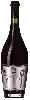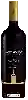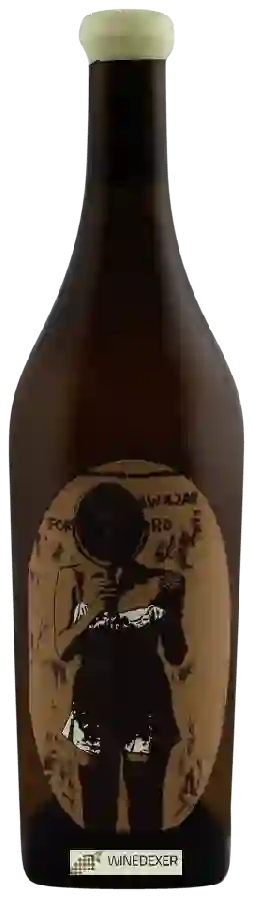
Winery Sine Qua NonBackward & Forward
 White wine


This wine generally goes well with pork, poultry or shellfish.
Food and wine pairings with Backward & Forward
Pairings that work perfectly with Backward & Forward



Original food and wine pairings with Backward & Forward

The Backward & Forward of Winery Sine Qua Non matches generally quite well with dishes of pasta, pork or shellfish such as recipes of pasta shells, cassoulet or monkfish in foil.
Details and technical informations about Winery Sine Qua Non's Backward & Forward.
Discover the grape variety: Scheurebe
German grape variety obtained in 1916 by Georg Shere (1879/1949). It was given until then as coming from a cross between Riesling and Sylvaner, but genetic tests have shown that its father is the Bouquettraube (Bukettrebe), and it is closely related to the Kerner. The Scheurebe can be found in Austria, Germany, Belgium, Switzerland, the Netherlands, Italy, Slovenia, Great Britain, the United States (California, Virginia, ...), Canada (Ontario, British Columbia, ...), ... practically unknown in France.
Informations about the Winery Sine Qua Non
The Winery Sine Qua Non is one of wineries to follow in Central Coast.. It offers 160 wines for sale in the of Central Coast to come and discover on site or to buy online.

The wine region of Central Coast
The wine region of Central Coast is located in the region of California of United States. We currently count 843 estates and châteaux in the of Central Coast, producing 1597 different wines in conventional, organic and biodynamic agriculture. The wines of Central Coast go well with generally quite well with dishes .
The wine region of California
California is the largest and most important wine region in the United States. It represents the southern two-thirds (850 miles or 1,370 kilometers) of the country's west coast. (Oregon and Washington make up the rest. ) The state also spans nearly 10 degrees of latitude.
The word of the wine: Solera
A method of maturing practiced in Andalusia for certain sherries, which aims to continuously blend older and younger wines. It consists of stacking several layers of barrels; those located at ground level (solera) contain the oldest wines, the youngest being stored in the barrels on the upper level. The wine to be bottled is taken from the barrels on the lower level, which is replaced by younger wine from the upper level, and so on.