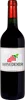
Winery Schunk PinceCabernet Franc
 Red wine
This wine generally goes well with pork, poultry or beef.
The Cabernet Franc of the Winery Schunk Pince is in the top 20 of wines of Hungary.
Food and wine pairings with Cabernet Franc
Pairings that work perfectly with Cabernet Franc



Original food and wine pairings with Cabernet Franc


The Cabernet Franc of Winery Schunk Pince matches generally quite well with dishes of beef, pork or game (deer, venison) such as recipes of flemish beer stew, turkey roulades, flavoured sauce or prime rib with chervil butter.
Details and technical informations about Winery Schunk Pince's Cabernet Franc.
Discover the grape variety: Cabernet franc
Cabernet Franc is one of the oldest red grape varieties in Bordeaux. The Libourne region is its terroir where it develops best. The terroirs of Saint-Emilion and Fronsac allow it to mature and develop its best range of aromas. It is also the majority in many blends. The very famous Château Cheval Blanc, for example, uses 60% Cabernet Franc. The wines produced with Cabernet Franc are medium in colour with fine tannins and subtle aromas of small red fruits and spices. When blended with Merlot and Cabernet Sauvignon, it brings complexity and a bouquet of aromas to the wine. It produces fruity wines that can be drunk quite quickly, but whose great vintages can be kept for a long time. It is an earlier grape variety than Cabernet Sauvignon, which means that it is planted as far north as the Loire Valley. In Anjou, it is also used to make sweet rosé wines. Cabernet Franc is now used in some twenty countries in Europe and throughout the world.
Informations about the Winery Schunk Pince
The Winery Schunk Pince is one of of the world's greatest estates. It offers 6 wines for sale in the of Hungary to come and discover on site or to buy online.

The wine region of Hungary
Hungary, in Central Europe, has gained its reputation in the wine world through just a couple of wine styles, but for centuries it has been a wine-producing nation of considerable diversity. In addition to the Sweet wines of Tokaj and the Deep Bull's Blood of Eger, the Hungarian wine portfolio includes Dry whites from the shores of Lake Balaton, Somló and Neszmély, and finer reds from various regions, notably Villány, Sopron and Szekszard. Hungarian wine culture stretches back to Roman times and has survived numerous political, religious and economic challenges, including Islamic rule during the 16th Century (when Alcohol was prohibited) and the Phylloxera epidemic of the late 1800s. The modern Hungarian wine regions are distributed around the country.
The word of the wine: Saignée (rosé de)
Rosé wine made from a vat of black grapes after a short maceration period.