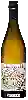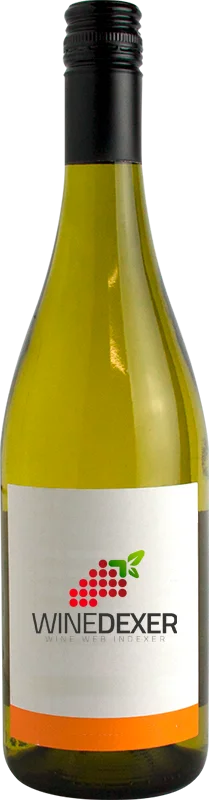
Winery SchrothAsselheim Weissburgunder
 White wine



In the mouth this white wine is a with a nice freshness.
This wine generally goes well with rich fish (salmon, tuna etc), shellfish or mild and soft cheese.
Taste structure of the Asselheim Weissburgunder from the Winery Schroth
Light | Bold | |
Dry | Sweet | |
Soft | Acidic |
In the mouth the Asselheim Weissburgunder of Winery Schroth in the region of Pfalz is a with a nice freshness.
Food and wine pairings with Asselheim Weissburgunder
Pairings that work perfectly with Asselheim Weissburgunder



Original food and wine pairings with Asselheim Weissburgunder

The Asselheim Weissburgunder of Winery Schroth matches generally quite well with dishes of rich fish (salmon, tuna etc), shellfish or mild and soft cheese such as recipes of sushi cake, monkfish tail with coconut milk and curry or potato gratin with bacon and cheese.
Details and technical informations about Winery Schroth's Asselheim Weissburgunder.
Discover the grape variety: Panse de Provence
Most certainly of oriental origin, introduced in Spain then spread in France, in Italy, in North Africa... more generally on all the Mediterranean basin. It can also be found in the United States, Thailand, ... and in many other countries. It should not be confused with the early or Sicilian pansy at first maturity.
Last vintages of this wine
The best vintages of Asselheim Weissburgunder from Winery Schroth are 0, 2016
Informations about the Winery Schroth
The Winery Schroth is one of of the world's greatest estates. It offers 55 wines for sale in the of Pfalz to come and discover on site or to buy online.

The wine region of Pfalz
Pfalz is a key wine producing region in western Germany, located between the Rhein/Rhine river and the low-lying Haardt mountain range (a natural continuation of the Alsatian Vosges). It covers a rectangle of land 45 miles (75km) Long and 15 miles (25km) wide. To the NorthLiesRheinhessen; to the South, the French border and Alsace. In terms of both quality and quantity, Pfalz is one of Germany's most important regions, and one which shows great promise for the future.
The word of the wine: Oenologist
Specialist in wine-making techniques. It is a profession and not a passion: one can be an oenophile without being an oenologist (and the opposite too!). Formerly attached to the Faculty of Pharmacy, oenology studies have become independent and have their own university course. Learning to make wine requires a good chemical background but also, increasingly, a good knowledge of the plant. Some oenologists work in laboratories (analysis). Others, the consulting oenologists, work directly in the properties.