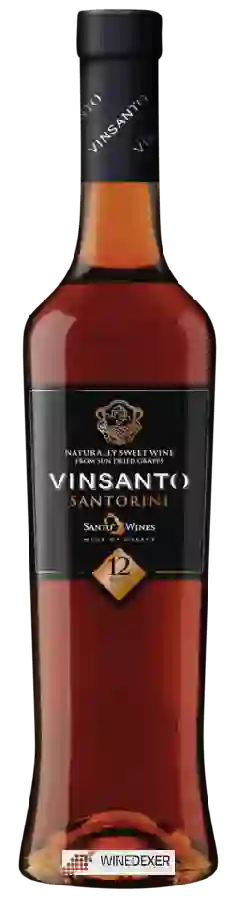
Winery SantoWinesVinsanto Reserve 12 years
 Sweet wine


This wine generally goes well with
The Vinsanto Reserve 12 years of the Winery SantoWines is in the top 80 of wines of Santorini.
Wine flavors and olphactive analysis


On the nose the Vinsanto Reserve 12 years of Winery SantoWines in the region of Santorini often reveals types of flavors of non oak, earth or oak and sometimes also flavors of dried fruit.
Details and technical informations about Winery SantoWines's Vinsanto Reserve 12 years.
Discover the grape variety: Assyrtiko
This is a very old grape variety grown in Greece, particularly in the southern Cyclades Islands in the Aegean Sea, and more specifically in the Santorini archipelago. It is related to gaidouria and platani. In this country, it is quite often "associated" with other grape varieties such as aïdani, athiri, malagousia, ... . Assyrtiko can be found in Germany, Spain, Italy, Greece, Cyprus, Bulgaria, Romania, the United States, Mexico, South Africa, etc. Little known in France, it is nevertheless registered in the Official Catalogue of wine grape varieties, list A.
Last vintages of this wine
The best vintages of Vinsanto Reserve 12 years from Winery SantoWines are 2016, 0
Informations about the Winery SantoWines
The Winery SantoWines is one of of the world's great estates. It offers 37 wines for sale in the of Santorini to come and discover on site or to buy online.

The wine region of Santorini
The wine region of Santorini is located in the region of Cyclades of Santorini of Greece. Wineries and vineyards like the Domaine Argyros or the Domaine Argyros produce mainly wines white, sweet and red. The most planted grape varieties in the region of Santorini are Assyrtiko, Aidani and Vidiano, they are then used in wines in blends or as a single variety. On the nose of Santorini often reveals types of flavors of butterscotch, eucalyptus or dark chocolate and sometimes also flavors of raspberry, red cherry or cocoa.
The word of the wine: Eye
In tasting, this is the first phase of the analysis of the wine, which consists of describing its visual aspect (colour, intensity, clarity, brilliance and possible defects).