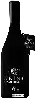
Winery SantoWinesCrescendo
 Red wine


This wine generally goes well with

Wine flavors and olphactive analysis



On the nose the Crescendo of Winery SantoWines in the region of Aegean Sea often reveals types of flavors of earth, red fruit or black fruit.
Details and technical informations about Winery SantoWines's Crescendo.
Discover the grape variety: Landal
Deeply colored, simple and fruity reds with a dark ruby robe, lightly firm tannins and a direct palate, showing signature aromas of red fruits (cherry, raspberry), gentle spices and herbaceous notes. Cold and disease resistant profile. Grown mainly in Canada (Quebec, Ontario) and the northeastern US for vineyards with harsh continental climates. French black hybrid obtained around 1933 by Pierre Landot (Landot 244).
Last vintages of this wine

The best vintages of Crescendo from Winery SantoWines are 2014, 2013, 2018, 2016 and 2012.
Informations about the Winery SantoWines
The Winery SantoWines is one of of the world's great estates. It offers 37 wines for sale in the of Cyclades to come and discover on site or to buy online.

The wine region of Cyclades
Greek IGP of the Cycladic islands in the Aegean (dark volcanic soils, meltemi winds, hydro-stress, kouloura bush-trained vines on Santorini, >30 m depth): Assyrtiko as world-class signature white — sharp acidity and intense volcanic salinity, candied citrus, white flowers and iodine notes, textured body preserved in the dry climate. Aidani and Athiri as delicate complements. Vinsanto as golden passito. Two major PDOs (Santorini and Paros), IGP 2008.
The wine region of Aegean Sea
West Turkish coastal region (Izmir, Manisa, Denizli, Aydin), ~53% of national production, sunny Mediterranean climate. Sultaniye: light and fresh with citrus, apple, melon. Bornova Misketi: aromatic and floral (rose, honey). Reds: Cabernet Sauvignon and Syrah dense and sunny (blackcurrant, blackberry, pepper, garrigue, firm tannins) — international varieties that ripen perfectly here.
The word of the wine: Astringency
Chemical stimulation that tightens the mucous membranes of the mouth and causes a sensation of harshness, which is characteristic of the presence of tannins. With time, the tannins lose their harshness and become softer.