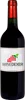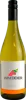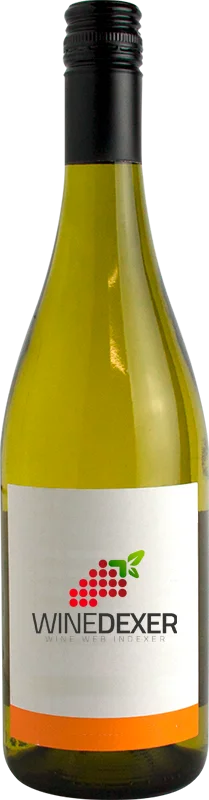
Winery Sangre y ArenaBlanco Semidulce
 White wine


This wine generally goes well with
Details and technical informations about Winery Sangre y Arena's Blanco Semidulce.
Discover the grape variety: Cabernet blanc
Interspecific cross between Cabernet Sauvignon and a long-unknown grape variety - that would be Regent - obtained in 1991 by Valentin Blattner from Soyhières (Switzerland) and propagated by Volker Freytag (Germany). No resistance gene has been identified to either mildew or powdery mildew. Cabernet blanc can be found in Switzerland, Belgium, the Netherlands, Germany, Austria, Luxembourg, the Czech Republic, Italy, England, etc., but is still little known in France.
Last vintages of this wine
The best vintages of Blanco Semidulce from Winery Sangre y Arena are 2015, 0
Informations about the Winery Sangre y Arena
The Winery Sangre y Arena is one of of the world's greatest estates. It offers 6 wines for sale in the of La Mancha to come and discover on site or to buy online.

The wine region of La Mancha
The wine region of La Mancha is located in the region of Castille of Spain. Wineries and vineyards like the Domaine Cinco Estrellas or the Domaine Munoz produce mainly wines red, white and pink. The most planted grape varieties in the region of La Mancha are Tempranillo, Cabernet-Sauvignon and Merlot, they are then used in wines in blends or as a single variety. On the nose of La Mancha often reveals types of flavors of cherry, mint or jasmine and sometimes also flavors of sweet tobacco, graphite or grass.
The wine region of Castille
Castilla-La Mancha is a large region located South and east of the Spanish capital, Madrid. Inexpensive table wines are produced from a variety of Grapes. Higher quality wines are increasingly available, but the region is traditionally known as a source of low quality bulk wine. More than half of Spain's grapes are grown here.
The word of the wine: Yeast
Micro-organisms at the base of all fermentative processes. A wide variety of yeasts live and thrive naturally in the vineyard, provided that treatments do not destroy them. Unfortunately, their replacement by laboratory-selected yeasts is often the order of the day and contributes to the standardization of the wine. Yeasts are indeed involved in the development of certain aromas.