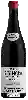
Winery Rozas PrimerVinos De Madrid Garnacha
 Red wine
In the mouth this red wine is a powerful.
This wine generally goes well with poultry, beef or game (deer, venison).

Taste structure of the Vinos De Madrid Garnacha from the Winery Rozas Primer
Light | Bold | |
Smooth | Tannic | |
Dry | Sweet | |
Soft | Acidic |
In the mouth the Vinos De Madrid Garnacha of Winery Rozas Primer in the region of Madrid is a powerful.
Food and wine pairings with Vinos De Madrid Garnacha
Pairings that work perfectly with Vinos De Madrid Garnacha



Original food and wine pairings with Vinos De Madrid Garnacha


The Vinos De Madrid Garnacha of Winery Rozas Primer matches generally quite well with dishes of beef, lamb or poultry such as recipes of mexican beef tacos, moussaka with spices or chicken pie.
Details and technical informations about Winery Rozas Primer's Vinos De Madrid Garnacha.
Discover the grape variety: Garnacha
Generous, warm reds with an evolving ruby robe, smooth tannins and an ample palate, showing intense aromas of ripe red fruits (cherry, candied raspberry), garrigue, dry herbs, spices, liquorice and sun-drenched notes. Also in luscious rosés and sweet wines (Banyuls). Absolute star of Priorat DOQ, pillar of Rioja DOCa, Garnacha de Aragón, Campo de Borja DO, Calatayud DO and Châteauneuf-du-Pape AOC. Aragonese autochthonous variety, one of the most planted worldwide.
Informations about the Winery Rozas Primer
The Winery Rozas Primer is one of of the world's greatest estates. It offers 1 wines for sale in the of Madrid to come and discover on site or to buy online.

The wine region of Madrid
High-altitude Spanish DO (600-1,000 m), a qualitative renaissance led by old Garnacha vines. Sun-drenched, fine Garnacha reds with signature notes of ripe cherry, wild strawberry, garrigue, white pepper and a granite mineral touch, silky tannins and altitude freshness — San Martín de Valdeiglesias leads. Fleshy Tempranillo (Tinto Fino) at Arganda. Native Albillo Real whites, ample and floral (pear, honey).
The word of the wine: Malolactic fermentation
Called second fermentation or malo for short. It is the degradation (under the effect of bacteria) of the malic acid naturally present in the wine into milder, less aggressive lactic acid. Some producers or wineries refuse this operation by "blocking the malo" (by cold and adding SO2) to keep a maximum of acidity which carries the aromas and accentuates the sensation of freshness.