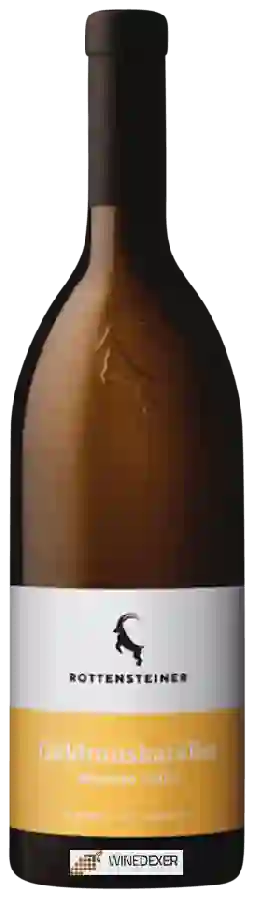
Winery RottensteinerGoldmuskateller
 White wine



In the mouth this white wine is a powerful.
This wine generally goes well with lean fish, shellfish or mature and hard cheese.

Taste structure of the Goldmuskateller from the Winery Rottensteiner
Light | Bold | |
Dry | Sweet | |
Soft | Acidic |
In the mouth the Goldmuskateller of Winery Rottensteiner in the region of Trentino-Alto-Adige is a powerful.
Food and wine pairings with Goldmuskateller
Pairings that work perfectly with Goldmuskateller



Original food and wine pairings with Goldmuskateller


The Goldmuskateller of Winery Rottensteiner matches generally quite well with dishes of pasta, shellfish or mature and hard cheese such as recipes of spaghetti with salmon, cassolettes of scallops or saint nectaire cheese spread with local ham.
Details and technical informations about Winery Rottensteiner's Goldmuskateller.
Discover the grape variety: Manseng
Light and fruity reds with a clear ruby robe, fine tannins and fresh acidity, with aromas of red fruits (raspberry, redcurrant), spices and herbaceous notes. An airy, easy-drinking style. Preserved in a few heritage plots in Béarn and the French Basque Country for its historical value. A very rare autochthonous south-west variety, with no direct genetic link to the white petit and gros manseng despite the shared name.
Last vintages of this wine
The best vintages of Goldmuskateller from Winery Rottensteiner are 2016, 0
Informations about the Winery Rottensteiner
The Winery Rottensteiner is one of of the world's great estates. It offers 29 wines for sale in the of Trentino-Alto-Adige to come and discover on site or to buy online.

The wine region of Trentino-Alto-Adige
Italy's northernmost alpine vineyard, two identities. Aromatic, precise whites are the stars: signature opulent Gewurztraminer (lychee, rose, spice), ample Pinot Grigio, mineral Pinot Bianco, lively high-altitude Muller-Thurgau. Native reds: dense fruity Teroldego (blackberry, violet), deep Lagrein with plum and chocolate notes, light crunchy Schiava, spicy Marzemino. Trento DOC Metodo Classico sparklers.
The word of the wine: Velouté
Said of a wine that is soft and caressing in the mouth.