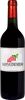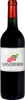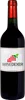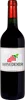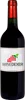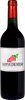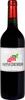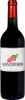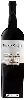
Winery Rocca delle BaronieNegroamaro
 Red wine


In the mouth this red wine is a powerful with a lot of tannins present in the mouth.
This wine generally goes well with beef, lamb or pasta.
Taste structure of the Negroamaro from the Winery Rocca delle Baronie
Light | Bold | |
Smooth | Tannic | |
Dry | Sweet | |
Soft | Acidic |
In the mouth the Negroamaro of Winery Rocca delle Baronie in the region of Puglia is a powerful with a lot of tannins present in the mouth.
Food and wine pairings with Negroamaro
Pairings that work perfectly with Negroamaro



Original food and wine pairings with Negroamaro
The Negroamaro of Winery Rocca delle Baronie matches generally quite well with dishes of beef, pasta or lamb such as recipes of beef tongue in hot sauce, pasta with crispy parma ham or saddle of lamb stuffed with chicken breast and basil.
Details and technical informations about Winery Rocca delle Baronie's Negroamaro.
Discover the grape variety: Aspiran
Aspiran is a grape variety whose first traces go back to Gallo-Roman times. Originally from the Languedoc region, it is not very common nowadays. It has many alternative names, including verdal, ribeyrenc and riveyrenc. The vine, which is more or less upright, has average vigor. The ripening of the second late period allows the picking of compact, winged, conical bunches of medium size. The berries are protected by a resistant, albeit thin, skin, which is distinguished by its plum-colored hue, but can also appear pink, gray or white. The flesh is delicious with its spicy and sweet taste and is rich in juice. When vinified, it gives a product with a delicate colour, slightly perfumed and fine in the mouth. Although it does not fear arid and rocky soils, Aspiran is sensitive to winter frosts.
Last vintages of this wine
The best vintages of Negroamaro from Winery Rocca delle Baronie are 0
Informations about the Winery Rocca delle Baronie
The Winery Rocca delle Baronie is one of of the world's greatest estates. It offers 4 wines for sale in the of Puglia to come and discover on site or to buy online.

The wine region of Puglia
Puglia (Apulia to many English speakers) is a Long, slender wine region in the extreme Southeast corner of Italy's "boot". To use the shoe analogy often used to illustrate the shape of Italy, Apulia extends from the tip of the heel to the mid-calf, where the spur of the Gargano Peninsula juts out into the Adriatic Sea. The heel (the Salento peninsula) occupies the southern half of the region and is of great importance for the identity of Puglia. Not only are there cultural and geographical differences from Northern Puglia, but the wines are also different.
The word of the wine: Grape variety
A type of vine plant and, by extension, the term used to designate the grapes that come from it. The term "table grape" is used to designate the grapes used for consumption, whereas the term "grape variety" is used to designate the wine grapes used to make wine.