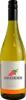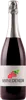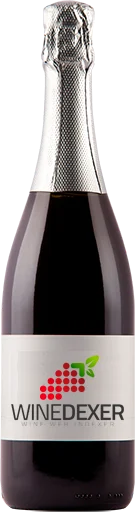
Winery Robbers & Van Den HoogenEmissaire Brut
 Sparkling wine



This wine is a blend of 3 varietals which are the Chenin blanc, the Pinot blanc and the Riesling.
This wine generally goes well with fruity desserts, pork or vegetarian.
Food and wine pairings with Emissaire Brut
Pairings that work perfectly with Emissaire Brut



Original food and wine pairings with Emissaire Brut



The Emissaire Brut of Winery Robbers & Van Den Hoogen matches generally quite well with dishes of pork, rich fish (salmon, tuna etc) or shellfish such as recipes of the garbure, salmon steaks with cream sauce or cuttlefish armorican style (morgate).
Details and technical informations about Winery Robbers & Van Den Hoogen's Emissaire Brut.
Discover the grape variety: Chenin blanc
It most certainly originates from the Anjou region and is registered in the official catalogue of wine grape varieties on the A1 list. It can also be found in South Africa, Australia, Argentina, Chile, the United States (California), New Zealand, etc. It is said to be a descendant of Savagnin and to have sauvignonasse as its second parent (Jean-Michel Boursiquot 2019). On the other hand, Chenin blanc is the half-brother of verdelho and sauvignon blanc and is the father of colombard.
Informations about the Winery Robbers & Van Den Hoogen
The Winery Robbers & Van Den Hoogen is one of of the world's greatest estates. It offers 36 wines for sale in the of Luxembourg to come and discover on site or to buy online.

The wine region of Luxembourg
Luxembourg (officially the 'Grand Duchy of Luxembourg') is a landlocked nation at the junction of Belgium, Germany and France. It is a small country in comparison to its neighbors, extending just 80km (50 miles) North to South and 50km (30 miles) west to east, it covers just over 2,500 square kilometers (960sq miles). Only 1 percent of this is given over to viticulture. Located in the north of Western Europe, this is one of the world's cooler wine regions.
The word of the wine: Texture
In tasting, the equivalent of touch. It is the set of tactile sensations perceived by the mucous membranes of the mouth: silky, velvety, sticky, fatty, astringent, pasty, etc.