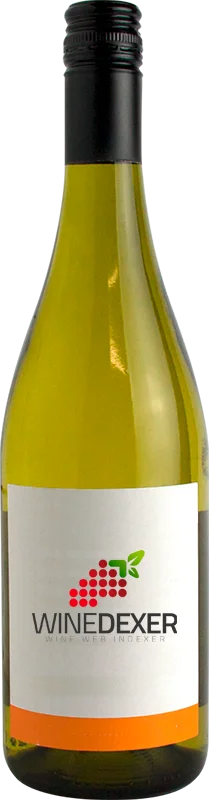
Domaine RimbertUgni Glou
 White wine



In the mouth this white wine is a .
This wine generally goes well with vegetarian, poultry or lean fish.
Taste structure of the Ugni Glou from the Domaine Rimbert
Light | Bold | |
Dry | Sweet | |
Soft | Acidic |
In the mouth the Ugni Glou of Domaine Rimbert in the region of Languedoc-Roussillon is a .
Food and wine pairings with Ugni Glou
Pairings that work perfectly with Ugni Glou



Original food and wine pairings with Ugni Glou


The Ugni Glou of Domaine Rimbert matches generally quite well with dishes of pasta, vegetarian or poultry such as recipes of pasta with crispy parma ham, quiche with bacon and gruyère cheese or stuffed peppers.
Details and technical informations about Domaine Rimbert's Ugni Glou.
Discover the grape variety: Chenin
Chenin, also known as pinot de la Loire Valley (pineau), is the flagship grape variety of the Loire Valley. It would have found its first origins in Anjou where it would have been cultivated by the monks of the Abbey of Saint-Maur located between Angers and Saumur since the 6th century. chenin is a great white grape variety which likes particularly the chalky soils called here stones of tufa which were used for the construction of the castles of the Loire Valley. Its bunches are medium-sized, fairly compact and its berries are more or less small. It is an early variety, which resists well to diseases. Chenin has the particularity of being able to participate as well in the elaboration of dry white wines as of sweet white wines or sparkling wines. Perfectly structured by the acidity, elegant, with a complex nose and aromas of yellow fruits, dry fruits, citrus fruits, white flowers, honey... the wine resulting from the chenin is rather lively and nervous, which allows him a good potential of guard. Chenin covers about 10,000 hectares in France, and is very productive in South Africa where it covers more than 26,000 hectares.
Last vintages of this wine
The best vintages of Ugni Glou from Domaine Rimbert are 0
Informations about the Domaine Rimbert
The Domaine Rimbert is one of of the world's great estates. It offers 26 wines for sale in the of Saint-Chinian to come and discover on site or to buy online.

The wine region of Saint-Chinian
Saint-Chinian is an appellation in the Languedoc-roussillon">Languedoc-Roussillon wine region of southern France. It is located between Minervois and Faugeres, which produce similar styles of robust red wine from similar grapes and in a similar landscape. It is also adjacent to the Muscat de Saint-Jean-de-Minervois appellation, which produces Sweet white wines. Therefore, the diversity of the Languedoc region is well demonstrated in this small area.
The wine region of Languedoc-Roussillon
Languedoc (formerly Coteaux du Languedoc) is a key appellation used in the Languedoc-Roussillon wine region of southern France. It covers Dry table wines of all three colors (red, white and rosé) from the entire region, but leaves Sweet and Sparkling wines to other more specialized appellations. About 75% of all Languedoc wines are red, with the remaining 25% split roughly down the middle between whites and rosés. The appellation covers most of the Languedoc region and almost a third of all the vineyards in France.
The word of the wine: Aging
Period during which a wine is kept in a cellar where it goes through different phases of evolution of its aromatic range and a maturation of its constituents (evolution of the colour, refining of the tannins, harmonization of the different flavours, etc.). The wine evolves better and less quickly in large containers, whereas it deteriorates prematurely in half-bottles.