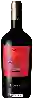
Winery RampoldiBrunetto Rosso
 Red wine


In the mouth this red wine is a powerful.
This wine generally goes well with beef, game (deer, venison) or lamb.

Taste structure of the Brunetto Rosso from the Winery Rampoldi
Light | Bold | |
Smooth | Tannic | |
Dry | Sweet | |
Soft | Acidic |
In the mouth the Brunetto Rosso of Winery Rampoldi in the region of Veneto is a powerful.
Food and wine pairings with Brunetto Rosso
Pairings that work perfectly with Brunetto Rosso



Original food and wine pairings with Brunetto Rosso

The Brunetto Rosso of Winery Rampoldi matches generally quite well with dishes of beef, pasta or lamb such as recipes of beef bourguignon with cookéo, spaghetti neapolitan style or lamb curl.
Details and technical informations about Winery Rampoldi's Brunetto Rosso.
Discover the grape variety: Sangiovese
Firm, upright reds with precise acidity and angular tannins, showing aromas of sour cherry, plum, dried herbs, leather, black tea and balsamic notes. Characteristically bitter, savoury finish. Star of Chianti Classico DOCG, Brunello di Montalcino DOCG, Vino Nobile di Montepulciano DOCG and Morellino di Scansano. Italy's most planted variety, a descendant of Ciliegiolo × Calabrese di Montenuovo.
Last vintages of this wine

The best vintages of Brunetto Rosso from Winery Rampoldi are 2008, 0
Informations about the Winery Rampoldi
The Winery Rampoldi is one of of the world's greatest estates. It offers 9 wines for sale in the of Veneto to come and discover on site or to buy online.

The wine region of Veneto
World star of Prosecco: fresh, light Glera sparklers with notes of pear, green apple and white flowers, fruity, convivial bubbles. Veronese reds from Corvina and Rondinella: light, crisp Bardolino, fruity Valpolicella, opulent, concentrated Amarone DOCG (black cherry, chocolate, raisin) from dried grapes. Mineral, almondy Soave (Garganega) whites, fresh Pinot Grigio. 97,500 ha, Italy's largest production.
The word of the wine: Terroir
Strictly speaking, the notion of terroir corresponds to the geological characteristics of a vineyard. However, when we talk about terroir, we take into account the soil, the climate (even the microclimate), the flora, the fauna, and the human factor that characterizes the practices that make up the art of the craft.