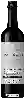
Winery Ramos PintoTouriga Nacional
 Red wine


This wine generally goes well with beef and mature and hard cheese.
Food and wine pairings with Touriga Nacional
Pairings that work perfectly with Touriga Nacional


Original food and wine pairings with Touriga Nacional
The Touriga Nacional of Winery Ramos Pinto matches generally quite well with dishes of beef or mature and hard cheese such as recipes of german recipe for marinated meat: sauerbraten or veal cutlets with savoy tomme.
Details and technical informations about Winery Ramos Pinto's Touriga Nacional.
Discover the grape variety: Touriga nacional
Most certainly Portuguese, not to be confused with the Touriga Franca also of the same origin. In Portugal, where it is widely cultivated, it is used to produce, among other things, the famous red Porto. It is also found in Uzbekistan, Australia, South Africa, Cyprus, Spain, etc... very little known in France, although it is listed in the Official Catalogue of A1 vines.
Last vintages of this wine
The best vintages of Touriga Nacional from Winery Ramos Pinto are 2017, 0
Informations about the Winery Ramos Pinto
The Winery Ramos Pinto is one of of the world's great estates. It offers 63 wines for sale in the of Vinho de Portugal to come and discover on site or to buy online.

The wine region of Vinho de Portugal
Portugal has undergone something of a wine revolution over the past two decades, modernizing its winemaking technologies, styles and attitudes. This archetypal Old World country has Long been famous for its fortified wines (Port and Madeira) and its light, tangy Vinho Verde. But it is now attracting much attention for its New wave of Rich, ripe table wines, especially the reds of the Douro Valley. Portugal's place in the wine world is arguably more about its cork production than its wine, but that largely depends on which period of history you choose.
The word of the wine: Performance
Quantity of grapes harvested per hectare. In AOC, the average yield is limited on the proposal of the appellation syndicate, validated by the Inao. The use of high-performance plant material (especially clones) and better control of vine diseases have increased yields. This is not without consequences on the quality of the wines (dilution) and on the state of the market (too much wine). We must not over-simplify: low yields are not synonymous with quality, and it is often in years with generous harvests that we find the greatest vintages (1982 and 1986 in Bordeaux, 1996 in Champagne, 1990 and 2005 in Burgundy...).