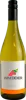
Winery Quinta do CanhotoEsquerdino Branco
 White wine


In the mouth this white wine is a .
This wine generally goes well with pork, lean fish or shellfish.
Taste structure of the Esquerdino Branco from the Winery Quinta do Canhoto
Light | Bold | |
Dry | Sweet | |
Soft | Acidic |
In the mouth the Esquerdino Branco of Winery Quinta do Canhoto in the region of Algarve is a .
Food and wine pairings with Esquerdino Branco
Pairings that work perfectly with Esquerdino Branco



Original food and wine pairings with Esquerdino Branco

The Esquerdino Branco of Winery Quinta do Canhoto matches generally quite well with dishes of pasta, pork or shellfish such as recipes of lasagna with pointed cabbage, beef tagine with vegetables or mussels with cream supers.
Details and technical informations about Winery Quinta do Canhoto's Esquerdino Branco.
Discover the grape variety: La Crescent
A direct-producer hybrid of American origin resulting from an interspecific cross between Saint Pepin and Elmer Swenson 6-8-25 (vitis riparia X Hamburg muscatel) obtained in 1988 by Peter Hemstad and James Luby at the University of Minnesota Research Center (United States). It can also be found in Canada, Ukraine, Russia, etc. and is virtually unknown in France.
Last vintages of this wine
The best vintages of Esquerdino Branco from Winery Quinta do Canhoto are 0, 2017
Informations about the Winery Quinta do Canhoto
The Winery Quinta do Canhoto is one of of the world's greatest estates. It offers 4 wines for sale in the of Algarve to come and discover on site or to buy online.

The wine region of Algarve
Algarve ('the Algarve' to most English speakers) is the southernmost wine region of Portugal, and the far southwestern corner of the Iberian Peninsula. It is more widely known for its beaches and thriving tourist industry than its wines. Although a small quantity of fresh-styled white wines are made here, the wines of the Algarve are predominantly red, and made from classic Portuguese varieties like Castelão and Touriga Nacional, as well as more international varieties like Syrah. The region's wines are produced largely by a by a small number of upscale co-operatives, although the fashion for independent producers is catching on quickly.
The word of the wine: Maturing (champagne)
After riddling, the bottles are stored on "point", upside down, with the neck of one bottle in the bottom of the other. The duration of this maturation is very important: in contact with the dead yeasts, the wine takes on subtle aromas and gains in roundness and fatness. A brut without year must remain at least 15 months in the cellar after bottling, a vintage 36 months.