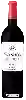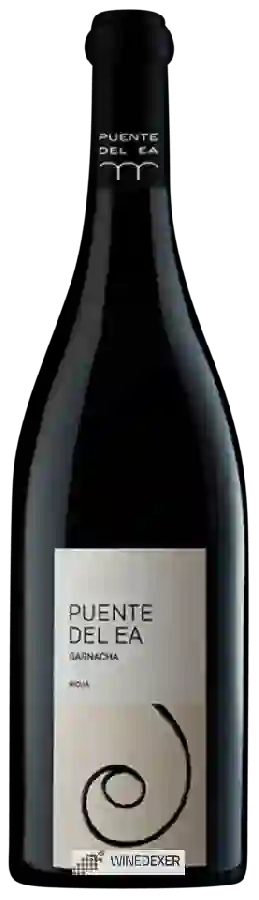
Winery Puente del EaVino de Autor Garnacha
 Red wine


In the mouth this red wine is a powerful with a nice balance between acidity and tannins.
This wine generally goes well with poultry, beef or veal.

Taste structure of the Vino de Autor Garnacha from the Winery Puente del Ea
Light | Bold | |
Smooth | Tannic | |
Dry | Sweet | |
Soft | Acidic |
In the mouth the Vino de Autor Garnacha of Winery Puente del Ea in the region of Rioja is a powerful with a nice balance between acidity and tannins.
Food and wine pairings with Vino de Autor Garnacha
Pairings that work perfectly with Vino de Autor Garnacha



Original food and wine pairings with Vino de Autor Garnacha

The Vino de Autor Garnacha of Winery Puente del Ea matches generally quite well with dishes of beef, lamb or veal such as recipes of chinese fondue, berber giblet frying pan or filet mignon of veal with cider.
Details and technical informations about Winery Puente del Ea's Vino de Autor Garnacha.
Discover the grape variety: Gamay de Chaudenay
Intensely coloured, simple reds with an opaque purple robe (red pulp), supple tannins and a light palate with moderate acidity, featuring discreet aromas of red fruits. Teinturier profile. Once used to intensify the colour of blends, now marginal and surviving in a few plots in Beaujolais and Burgundy as well as in ampelographic collections. Teinturier mutation of Gamay, obtained at Chaudenay in the 19th century.
Last vintages of this wine
The best vintages of Vino de Autor Garnacha from Winery Puente del Ea are 2013, 0
Informations about the Winery Puente del Ea
The Winery Puente del Ea is one of of the world's greatest estates. It offers 20 wines for sale in the of Rioja to come and discover on site or to buy online.

The wine region of Rioja
Star of great Spanish reds: signature Tempranillo, elegant and complex, with notes of ripe cherry, plum, leather, vanilla and tobacco from American oak ageing. Classification by age: fruity Joven, balanced Crianza, ample Reserva, deep, silky Gran Reserva (5 years, 2 in barrel). Some fresh Viura whites and generous rosés. Spain's first DOCa (1991), 3 sub-zones (Alta, Alavesa, Oriental), 93.
The word of the wine: White winemaking
White wines are obtained by fermentation of the juice after pressing. A pre-fermentation maceration is sometimes practiced to extract the aromatic substances from the skins. White wines are normally made from white grapes, but can also be made from red grapes (blanc de noirs). The grapes are then pressed as soon as they arrive at the vat house without maceration in order to prevent the colouring matter contained in the skins from "staining" the wine.