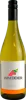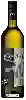
Winery Privatkellerei StorzRusticus*** Sauvignon Blanc Trocken
 White wine



In the mouth this white wine is a with a nice freshness.
This wine generally goes well with vegetarian, shellfish or goat cheese.
Taste structure of the Rusticus*** Sauvignon Blanc Trocken from the Winery Privatkellerei Storz
Light | Bold | |
Dry | Sweet | |
Soft | Acidic |
In the mouth the Rusticus*** Sauvignon Blanc Trocken of Winery Privatkellerei Storz in the region of Württemberg is a with a nice freshness.
Food and wine pairings with Rusticus*** Sauvignon Blanc Trocken
Pairings that work perfectly with Rusticus*** Sauvignon Blanc Trocken


Original food and wine pairings with Rusticus*** Sauvignon Blanc Trocken
The Rusticus*** Sauvignon Blanc Trocken of Winery Privatkellerei Storz matches generally quite well with dishes of shellfish, vegetarian or goat cheese such as recipes of linguine with squid ink and cockles, light tuna-tomato quiche (without cream) or leek, carrot and goat cheese gratin.
Details and technical informations about Winery Privatkellerei Storz's Rusticus*** Sauvignon Blanc Trocken.
Discover the grape variety: Subéreux
An interspecific cross made by Albert Seibel (1844-1936) between 4595 Seibel and 4199 Seibel. Little cultivated, it was used as a progenitor in obtaining direct producer hybrids known as Villard blanc, Villard noir, Vignoles, ... .
Last vintages of this wine
The best vintages of Rusticus*** Sauvignon Blanc Trocken from Winery Privatkellerei Storz are 0
Informations about the Winery Privatkellerei Storz
The Winery Privatkellerei Storz is one of of the world's great estates. It offers 43 wines for sale in the of Württemberg to come and discover on site or to buy online.

The wine region of Württemberg
Württemberg is known as Germany's premier red wine region. With almost 11,500 hectares (28,500 acres) of vineyards, it is the fourth-largest wine region in the country. Found adjacent to Baden and South of Franken, Wüttemberg is a particularly hilly and rural wine-region. Almost 70-percent of Württemberg wines are red, predominantly made from Trollinger, SchwarzRiesling and Lemberger.
The word of the wine: Côte des Bar
This is the name given to the vineyards of the Aube, which are closer to Burgundy, and some of the wines produced here bear witness to this proximity. The pinot noir dominates, the meunier is practically absent. Two crus have become references: Riceys, where a rosé without bubbles is also produced, and Montgueux near Troyes, renowned for its Chardonnay.