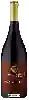
Winery Pinhal Da TorreResiliente
 Red wine


This wine is a blend of 2 varietals which are the Touriga franca and the Touriga nacional.
In the mouth this red wine is a powerful with a lot of tannins present in the mouth.
This wine generally goes well with poultry, beef or veal.
Taste structure of the Resiliente from the Winery Pinhal Da Torre
Light | Bold | |
Smooth | Tannic | |
Dry | Sweet | |
Soft | Acidic |
In the mouth the Resiliente of Winery Pinhal Da Torre in the region of Tejo is a powerful with a lot of tannins present in the mouth.
Food and wine pairings with Resiliente
Pairings that work perfectly with Resiliente



Original food and wine pairings with Resiliente

The Resiliente of Winery Pinhal Da Torre matches generally quite well with dishes of beef, pasta or veal such as recipes of tanjia, pasta with tuna and laughing cow or fillet of beef with morels.
Details and technical informations about Winery Pinhal Da Torre's Resiliente.
Discover the grape variety: Touriga franca
Most certainly Portuguese. It is said to be the result of a cross between the mourisco de semente and the touriga nacional, which should not be confused with it. It can be found in Australia, South Africa, the United States (California), etc. and is virtually unknown in France.
Last vintages of this wine
The best vintages of Resiliente from Winery Pinhal Da Torre are 2015, 0
Informations about the Winery Pinhal Da Torre
The Winery Pinhal Da Torre is one of of the world's great estates. It offers 43 wines for sale in the of Tejo to come and discover on site or to buy online.

The wine region of Tejo
Tejo is a wine region in CentralPortugal which covers the same area as the Ribatejo province, just inland from the major city of Lisbon. The wine appellation's name was changed from Ribatejo in 2009. The entire region may use the Tejo VR (Vinho Regional) designation, similar to the French IGP/Vin de Pays, while some areas produce wines labeled with the higher-level Do Tejo DOC (Denominação de Origem Controlada). A Warm, Dry area, it is also Portugal's only landlocked region – although it is influenced considerably by the Tejo river.
The word of the wine: Color
The colour of wines is characterized by its intensity and its nuances of hue. The intensity is specific to each grape variety, while the nuances of colour are linked to the evolution of the wine over time.