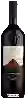
Winery PietrasantaSan Colombano
 Red wine



In the mouth this red wine is a powerful.
This wine generally goes well with beef, game (deer, venison) or lamb.
Taste structure of the San Colombano from the Winery Pietrasanta
Light | Bold | |
Smooth | Tannic | |
Dry | Sweet | |
Soft | Acidic |
In the mouth the San Colombano of Winery Pietrasanta in the region of Veneto is a powerful.
Food and wine pairings with San Colombano
Pairings that work perfectly with San Colombano



Original food and wine pairings with San Colombano

The San Colombano of Winery Pietrasanta matches generally quite well with dishes of beef, pasta or lamb such as recipes of fondue vigneronne au vin rouge, pasta gratin carbonara style or original mafé with okra.
Details and technical informations about Winery Pietrasanta's San Colombano.
Discover the grape variety: Cabernet-Cortis
Interspecific cross between Cabernet Sauvignon and Solaris (Merzling x Geisenheim 6493 (Zarya Severa x Muscat Ottonel)) made in 1982 by Norbert Becker of the Freiburg Research Institute in Germany. It has the particularity of having only one gene for resistance to mildew and powdery mildew. It can be found in the Netherlands, Denmark, Belgium, Switzerland, etc., but is still little known in France. Note that Cabernet-Carol has the same parents.
Last vintages of this wine
The best vintages of San Colombano from Winery Pietrasanta are 0
Informations about the Winery Pietrasanta
The Winery Pietrasanta is one of of the world's greatest estates. It offers 10 wines for sale in the of Veneto to come and discover on site or to buy online.

The wine region of Veneto
Veneto is an important and growing wine region in northeastern Italy. Veneto is administratively Part of the Triveneto area, aLong with its smaller neighbors, Trentino-Alto Adige and Friuli-Venezia Giulia. In terms of geography, culture and wine styles, it represents a transition from the Alpine and Germanic-Slavic end of Italy to the warmer, drier, more Roman lands to the South. Veneto is slightly smaller than the other major Italian wine regions - Piedmont, Tuscany, Lombardy, Puglia and Sicily - but it produces more wine than any of them.
The word of the wine: Aging on lees
Maturing on the lees enhances the stability, aromatic complexity and texture of white wines, which gain in body and volume. This phenomenon is induced by autolysis, the process of self-degradation of the lees.