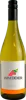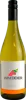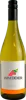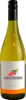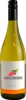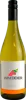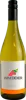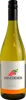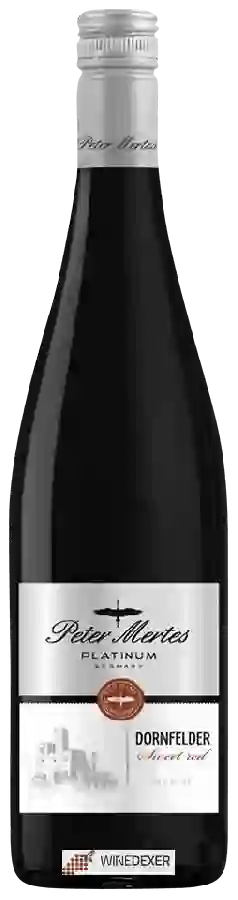
Winery Peter MertesPlatinum Dornfelder Sweet Red
 Sweet wine



This wine generally goes well with pork, poultry or veal.

Wine flavors and olphactive analysis


On the nose the Platinum Dornfelder Sweet Red of Winery Peter Mertes in the region of Rheinhessen often reveals types of flavors of cherry, strawberries or earth and sometimes also flavors of oak, red fruit.
Food and wine pairings with Platinum Dornfelder Sweet Red
Pairings that work perfectly with Platinum Dornfelder Sweet Red



Original food and wine pairings with Platinum Dornfelder Sweet Red

The Platinum Dornfelder Sweet Red of Winery Peter Mertes matches generally quite well with dishes of pasta, veal or pork such as recipes of tuscan pastachute, pork shank stew or rabbit socks in gibelotte.
Details and technical informations about Winery Peter Mertes's Platinum Dornfelder Sweet Red.
Discover the grape variety: Dornfelder
Intensely coloured, fruity reds with a dense purple robe, soft tannins and a generous palate, with aromas of black cherry, blackberry, plum and floral notes. Made as light easy-drinking reds, popular semi-dry cuvées and more structured barrel-aged versions. The second most planted red variety in Germany (Palatinate, Rheinhessen, Württemberg). Cross of helfensteiner × heroldrebe created in 1955 in Weinsberg by August Herold.
Last vintages of this wine
The best vintages of Platinum Dornfelder Sweet Red from Winery Peter Mertes are 2015, 2016, 2014
Informations about the Winery Peter Mertes
The Winery Peter Mertes is one of of the world's great estates. It offers 150 wines for sale in the of Rheinhessen to come and discover on site or to buy online.

The wine region of Rheinhessen
71% white region: Riesling is king (5,000 ha), dry to off-dry, ripe yellow fruit, apple, citrus and fine saline minerality. Supple, floral Müller-Thurgau for everyday, the world's largest Silvaner plantation with herbaceous, straight notes. Historic cradle of off-sweet Liebfraumilch. Some supple reds (Dornfelder, Spätburgunder).
The word of the wine: Generic
A term that can have several meanings, but often designates a branded wine as opposed to a wine from a vineyard or château, sometimes abused to designate regional appellations (e.g. Bordeaux, Burgundy, etc.).