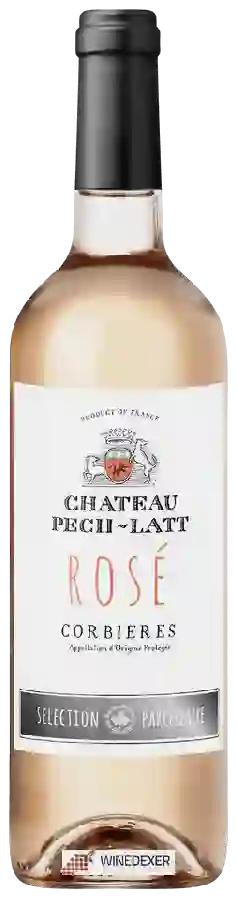
Château Pech-LattCorbières Rosé
 Pink wine


In the mouth this pink wine is a with a nice freshness.
This wine generally goes well with vegetarian, appetizers and snacks or lean fish.

Taste structure of the Corbières Rosé from the Château Pech-Latt
Light | Bold | |
Dry | Sweet | |
Soft | Acidic |
In the mouth the Corbières Rosé of Château Pech-Latt in the region of Languedoc-Roussillon is a with a nice freshness.
Food and wine pairings with Corbières Rosé
Pairings that work perfectly with Corbières Rosé



Original food and wine pairings with Corbières Rosé


The Corbières Rosé of Château Pech-Latt matches generally quite well with dishes of pasta, vegetarian or appetizers and snacks such as recipes of pasta with boursin, zucchini quiche or lightweight microwave chips.
Details and technical informations about Château Pech-Latt's Corbières Rosé.
Discover the grape variety: Barbera blanche
Crisp, taut whites with a marked acidity, showing discreet aromas of green apple, citrus, white flowers and fresh herbal notes. Neutral and refreshing profile. Preserved in confidential parcels in Piedmont (Monferrato, Alessandria) for its heritage value, subject to ampelographic studies. Very rare autochthonous Piedmontese variety, with no genetic link to black barbera despite the shared name.
Last vintages of this wine
The best vintages of Corbières Rosé from Château Pech-Latt are 2018, 2017, 2015
Informations about the Château Pech-Latt
The Château Pech-Latt is one of of the world's great estates. It offers 18 wines for sale in the of Corbières to come and discover on site or to buy online.

The wine region of Corbières
Largest AOC in Languedoc, 95% Mediterranean reds. Signature old-vine Carignan (up to 60%): fleshy reds with black fruit, garrigue, black olive, spice and tight tannins. Blended with round, sunny Grenache, peppery Syrah, dense Mourvèdre and supple Cinsault. A few fresh rosés and whites (Grenache Blanc, Roussanne).
The wine region of Languedoc-Roussillon
Largest single French vineyard, dominated by sunny, generous reds. Spicy Syrah, candied Grenache (ripe fruit, garrigue), structured Carignan, deep Mourvèdre, supple Cinsault. Stars: structured Corbières, Minervois, Faugères, Saint-Chinian; round Côtes-du-Roussillon. Legendary vins doux naturels: Banyuls and Maury (fortified Grenache) with notes of cocoa, fig, prune.
The word of the wine: Grape variety
A type of vine plant and, by extension, the term used to designate the grapes that come from it. The term "table grape" is used to designate the grapes used for consumption, whereas the term "grape variety" is used to designate the wine grapes used to make wine.