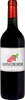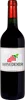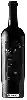
Winery OzenitCavosaviesan Syrah
 Red wine
In the mouth this red wine is a powerful with a nice balance between acidity and tannins.
This wine generally goes well with poultry, beef or game (deer, venison).
Taste structure of the Cavosaviesan Syrah from the Winery Ozenit
Light | Bold | |
Smooth | Tannic | |
Dry | Sweet | |
Soft | Acidic |
In the mouth the Cavosaviesan Syrah of Winery Ozenit in the region of Valais is a powerful with a nice balance between acidity and tannins.
Food and wine pairings with Cavosaviesan Syrah
Pairings that work perfectly with Cavosaviesan Syrah



Original food and wine pairings with Cavosaviesan Syrah

The Cavosaviesan Syrah of Winery Ozenit matches generally quite well with dishes of beef, lamb or game (deer, venison) such as recipes of boles de picolat (catalan meatballs), couscous chicken and merguez or rabbit with onions and mustard.
Details and technical informations about Winery Ozenit's Cavosaviesan Syrah.
Discover the grape variety: Roi des noirs
Interspecific crossing between 29 Seibel (70 jeager x Vitis Vinifera unknown) and the danugue made by Eugène Contassot, who would have given the seeds of the harvested grapes to Albert Seibel (1844-1936). The King of the Blacks has been widely cultivated, particularly in southwestern France and in the center-west, where we have found and photographed it. It was used several times as a sire by Albert Seibel, rubilande or 11803 Seibel is a good example.
Informations about the Winery Ozenit
The Winery Ozenit is one of of the world's greatest estates. It offers 12 wines for sale in the of Valais to come and discover on site or to buy online.

The wine region of Valais
The Valais is the largest wine region and appellation in Switzerland, responsible for around one third of the country's total wine production. The main Vineyard area covers the southeast-facing slopes of the dramatic Rhône river valley as the glacial waters run southwest between Leuk (Loeche in French) and Fully. The river changes direction at Martigny and then runs northwest to exit the valley and empty into Lac Léman (Lake Geneva). Vineyard area here comes to around 4,800 hectares (11,800 acres) and is generally located on (often steep) slopes and terraces between the flat, fertile, Heavy soils at the bottom of the valley - often given over to fruit production, industry and urban development - and the bare rock of the mountainside that towers above.
The word of the wine: Ugni blanc
White grape variety of Italian origin, and the main white variety grown in France. Its large bunches give fine, light and lively wines, suitable for distillation: today it is the main variety for making cognac and armagnac. Ugni blanc, which is a little richer in alcohol when grown in Mediterranean regions, is used in the blending of the Provence and Corsica appellations, often in association with other grape varieties that bring aromas and structure, such as clairette, grenache blanc or sauvignon. Ugni blanc is also used, on a secondary basis, in the production of certain white wines in Gironde (AOC Bordeaux, Entre-deux-Mers, etc.).