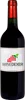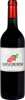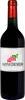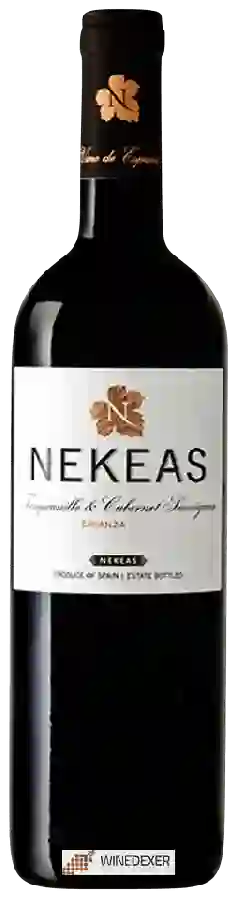
Bodegas NekeasNavarra Crianza
 Red wine


In the mouth this red wine is a powerful with a lot of tannins present in the mouth.
This wine generally goes well with poultry, beef or veal.

Taste structure of the Navarra Crianza from the Bodegas Nekeas
Light | Bold | |
Smooth | Tannic | |
Dry | Sweet | |
Soft | Acidic |
In the mouth the Navarra Crianza of Bodegas Nekeas in the region of Navarre is a powerful with a lot of tannins present in the mouth.


Food and wine pairings with Navarra Crianza
Pairings that work perfectly with Navarra Crianza



Original food and wine pairings with Navarra Crianza

The Navarra Crianza of Bodegas Nekeas matches generally quite well with dishes of beef, pasta or veal such as recipes of pastasciutta (corsica), cannelloni with parma ham or provencal veal tendrons.
Details and technical informations about Bodegas Nekeas's Navarra Crianza.
Discover the grape variety: Tempranillo
Elegant, structured reds with aromas of strawberry, cherry, plum, leather, blond tobacco and pronounced vanilla from long oak ageing. Ranges from Joven to Crianza, Reserva and Gran Reserva. Star of Rioja DOCa, Ribera del Duero DO and Toro DO, also shines in the Douro as Tinta Roriz/Aragonez. One of the world's most planted Spanish varieties.
Last vintages of this wine

The best vintages of Navarra Crianza from Bodegas Nekeas are 2014, 2010, 2009, 2013 and 2011.
Informations about the Bodegas Nekeas
The Bodegas Nekeas is one of of the world's great estates. It offers 53 wines for sale in the of Navarre to come and discover on site or to buy online.

The wine region of Navarre
Spanish reference for great Garnacha rosés: raspberry-pink colour, notes of crushed strawberry, cherry, citrus and white flowers, dry and gourmet palate. The emblematic grape (~70% of reds in the past), also in supple, sun-filled reds. Tempranillo on the rise in modern blends, fine spicy Graciano, Cabernet and Merlot. Fresh Chardonnay and Viura whites.
The word of the wine: Runoff
Failure of the vine flower to fertilize at the time of flowering, when the weather is too cold or rainy. Under these conditions, the vine will have few or no clusters.