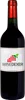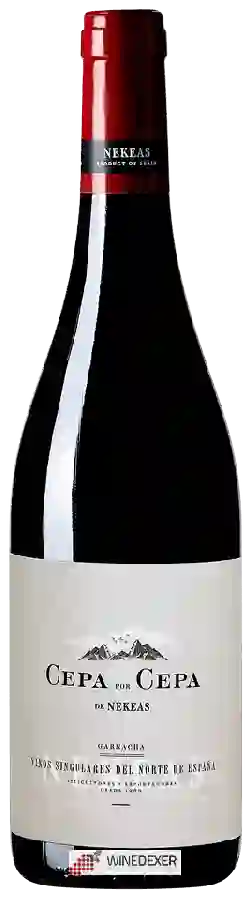
Bodegas NekeasCepa x Cepa Garnacha
 Red wine



In the mouth this red wine is a powerful with a nice balance between acidity and tannins.
This wine generally goes well with poultry, beef or game (deer, venison).

Taste structure of the Cepa x Cepa Garnacha from the Bodegas Nekeas
Light | Bold | |
Smooth | Tannic | |
Dry | Sweet | |
Soft | Acidic |
In the mouth the Cepa x Cepa Garnacha of Bodegas Nekeas in the region of Navarre is a powerful with a nice balance between acidity and tannins.
Wine flavors and olphactive analysis




On the nose the Cepa x Cepa Garnacha of Bodegas Nekeas in the region of Navarre often reveals types of flavors of non oak, earth or microbio and sometimes also flavors of oak, spices or citrus fruit.
Food and wine pairings with Cepa x Cepa Garnacha
Pairings that work perfectly with Cepa x Cepa Garnacha



Original food and wine pairings with Cepa x Cepa Garnacha


The Cepa x Cepa Garnacha of Bodegas Nekeas matches generally quite well with dishes of beef, pasta or lamb such as recipes of beef with mustard, macaroni and cheese gratin or mediterranean lamb necklace.
Details and technical informations about Bodegas Nekeas's Cepa x Cepa Garnacha.
Discover the grape variety: Bouchalès
Light and fruity reds with a clear ruby robe, barely noticeable tannins and a supple palate, with simple aromas of red fruits (cherry, raspberry, strawberry), soft spices and floral notes. A rustic airy profile to drink young. Often blended with Abouriou, Merlot and Cabernet Franc, it contributes to the AOC Côtes-du-Marmandais reds and reflects the South-West heritage. Native French black grape from the South-West (Côtes-du-Marmandais, Buzet).
Last vintages of this wine
The best vintages of Cepa x Cepa Garnacha from Bodegas Nekeas are 2018, 2013, 2016, 2015 and 2011.
Informations about the Bodegas Nekeas
The Bodegas Nekeas is one of of the world's great estates. It offers 53 wines for sale in the of Navarre to come and discover on site or to buy online.

The wine region of Navarre
Spanish reference for great Garnacha rosés: raspberry-pink colour, notes of crushed strawberry, cherry, citrus and white flowers, dry and gourmet palate. The emblematic grape (~70% of reds in the past), also in supple, sun-filled reds. Tempranillo on the rise in modern blends, fine spicy Graciano, Cabernet and Merlot. Fresh Chardonnay and Viura whites.
The word of the wine: Guyot (pruning)
This is the most widespread pruning technique. It includes one or two long branches and allows the mechanization of a large number of vineyard operations.