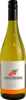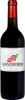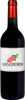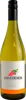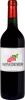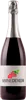
Winery MordentiColli piacentini Amabile Vino Frizzante Bonarda
 Red wine


In the mouth this red wine is a .
This wine generally goes well with poultry, beef or veal.
Taste structure of the Colli piacentini Amabile Vino Frizzante Bonarda from the Winery Mordenti
Light | Bold | |
Smooth | Tannic | |
Dry | Sweet | |
Soft | Acidic |
In the mouth the Colli piacentini Amabile Vino Frizzante Bonarda of Winery Mordenti in the region of Emilia-Romagna is a .
Food and wine pairings with Colli piacentini Amabile Vino Frizzante Bonarda
Pairings that work perfectly with Colli piacentini Amabile Vino Frizzante Bonarda



Original food and wine pairings with Colli piacentini Amabile Vino Frizzante Bonarda

The Colli piacentini Amabile Vino Frizzante Bonarda of Winery Mordenti matches generally quite well with dishes of beef, pasta or veal such as recipes of boeuf en daube, chinese bowl or tripe in the style of caen.
Details and technical informations about Winery Mordenti's Colli piacentini Amabile Vino Frizzante Bonarda.
Discover the grape variety: Meslier Saint-François
Meslier Saint François is a French grape variety that comes from the Gatinais, located south of the Paris basin. It was obtained from a cross between Chenin and Gouais Blanc. It is planted on a surface area of 50 ha in France and is often confused with Arbois, hence the synonym it shares with the latter, Orbois. Its berries and clusters are of normal size. Its adult leaves have convex teeth. Meslier Saint François is not very vigorous, but it remains fertile. It buds early, 3 days before Chasselas. It is often exposed to spring frosts and is susceptible to oidium and grey rot. Meslier Saint François produces flat, light wines with little alcohol. When distilled, its eaux de vie are full of bouquet and fine. It can thus be used in the blending of grape varieties that produce cognac or armagnac.
Last vintages of this wine
The best vintages of Colli piacentini Amabile Vino Frizzante Bonarda from Winery Mordenti are 0
Informations about the Winery Mordenti
The Winery Mordenti is one of of the world's greatest estates. It offers 2 wines for sale in the of Colli Piacentini to come and discover on site or to buy online.

The wine region of Colli Piacentini
The wine region of Colli Piacentini is located in the region of Émilie-Romagne of Italy. Wineries and vineyards like the Domaine Marcus Aurelius or the Domaine Luretta produce mainly wines sparkling, red and white. The most planted grape varieties in the region of Colli Piacentini are Cabernet-Sauvignon, Chardonnay and Marsanne, they are then used in wines in blends or as a single variety. On the nose of Colli Piacentini often reveals types of flavors of oaky, tree fruit or vegetal and sometimes also flavors of lychee, mango or orange.
The wine region of Emilia-Romagna
Romagna/emilia">Emilia-Romagna is a Rich and fertile region in Northern Italy, and one of the country's most prolific wine-producing regions, with over 58,000 hectares (143,320 acres) of vines in 2010. It is 240 kilometers (150 miles) wide and stretches across almost the entire northern Italian peninsula, sandwiched between Tuscany to the South, Lombardy and Veneto to the north and the Adriatic Sea to the east. Nine miles of Liguria is all that separates Emilia-Romagna from the Ligurian Sea, and its uniqueness as the only Italian region with both an east and west coast. Emilia-Romagna's wine-growing heritage dates back to the seventh century BC, making it one of the oldest wine-growing regions in Italy.
The word of the wine: Assembly
Blending of several wines to obtain a single batch. Using wines of the same origin, blending is very different from coupage - a mixture of wines from different origins - which has a pejorative connotation.