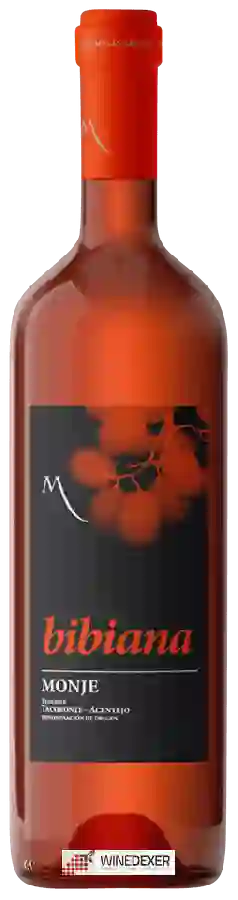
Bodegas MonjeBibiana Rosado
 Pink wine


This wine generally goes well with
Wine flavors and olphactive analysis


On the nose the Bibiana Rosado of Bodegas Monje in the region of Iles Canaries often reveals types of flavors of oak, spices or red fruit.
Details and technical informations about Bodegas Monje's Bibiana Rosado.
Discover the grape variety: Auxerrois
Auxerrois is a white grape variety native to Lorraine, which is also found in Alsace and in the Loire Valley, where it took off in 1950. Its name comes from the nurseries in Auxerre where it found refuge during the Second World War. Often called Pinot Auxerrois, it is part of the Moselle, Alsace and Côtes-de-Toul AOC grape varieties. Auxerrois should not be confused with côt or malbec, which are red grape varieties from the Cahors region and which may bear the same name. The bunches of Auxerrois are of medium size with small berries. It is a semi-late grape variety whose buds only come out when temperatures are well above 10°C. Auxerrois wines are characterized by finesse and acidity and subtle aromas of exotic fruits, fruits and white flowers. In France, it represents 1,600 hectares of production and some small parcels of Auxerrois are also present in Luxembourg, Germany, Canada and South Africa (2,300 hectares in total).
Last vintages of this wine

The best vintages of Bibiana Rosado from Bodegas Monje are 2016, 0, 2017
Informations about the Bodegas Monje
The Bodegas Monje is one of of the world's great estates. It offers 15 wines for sale in the of Tacoronte-Acentejo to come and discover on site or to buy online.

The wine region of Tacoronte-Acentejo
The wine region of Tacoronte-Acentejo is located in the region of Iles Canaries of Spain. Wineries and vineyards like the Domaine Bodegas Buten - Crater or the Domaine Marba produce mainly wines red, white and pink. The most planted grape varieties in the region of Tacoronte-Acentejo are Merlot, Tempranillo and Cabernet-Sauvignon, they are then used in wines in blends or as a single variety. On the nose of Tacoronte-Acentejo often reveals types of flavors of oaky, earthy or blackberry and sometimes also flavors of non oak, earth or oak.
The wine region of Iles Canaries
The archipelago of the Canary Islands (or Las Canarias) is an autonomous community of Spain located in the North Atlantic Ocean, 110 km from the west coast of Morocco. The wine trade there is far from famous - few local wines come out of the Canary Islands - but there is a Long and unique wine tradition in the region. The spectacularly high Canary Islands are located at a latitude of about 28°N, making it the most tropical wine region in Europe. It was thanks to this position, once traversed by naval trade routes, that the local wine industry flourished, shortly after the islands came under Spanish control in the early 15th century.
The word of the wine: Champagne rosé
Often obtained by adding red wines (from Champagne), it is even the only vineyard where this practice is allowed. Some producers prefer the practice used in other regions, i.e. a short maceration to extract sufficient colouring matter. This results in winey rosés for meals. Elegant aperitif rosé is more often made from red wine coloured Chardonnay. Rosés can be vintage or non vintage.