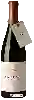
Winery MerayoGarnacha Tintorera
 Red wine


In the mouth this red wine is a powerful.
This wine generally goes well with poultry, beef or game (deer, venison).
Taste structure of the Garnacha Tintorera from the Winery Merayo
Light | Bold | |
Smooth | Tannic | |
Dry | Sweet | |
Soft | Acidic |
In the mouth the Garnacha Tintorera of Winery Merayo in the region of Castille-et-Léon is a powerful.
Food and wine pairings with Garnacha Tintorera
Pairings that work perfectly with Garnacha Tintorera



Original food and wine pairings with Garnacha Tintorera


The Garnacha Tintorera of Winery Merayo matches generally quite well with dishes of beef, pasta or lamb such as recipes of roast beef with caramelized onion, leek pie or grilled lamb shoulder with spices and honey.
Details and technical informations about Winery Merayo's Garnacha Tintorera.
Discover the grape variety: Egiodola
Egiodola noir is a grape variety that originated in France (Languedoc). It produces a variety of grape specially used for wine making. It is rare to find this grape to eat on our tables. This variety of grape is characterized by large bunches of grapes of medium size. The Egiodola noir can be found in several vineyards: South-West, Cognac, Bordeaux, Loire Valley, Languedoc & Roussillon, Provence & Corsica, Rhone Valley, Savoie & Bugey, Beaujolais, Armagnac.
Last vintages of this wine
The best vintages of Garnacha Tintorera from Winery Merayo are 0
Informations about the Winery Merayo
The Winery Merayo is one of of the world's greatest estates. It offers 12 wines for sale in the of Bierzo to come and discover on site or to buy online.

The wine region of Bierzo
The wine region of Bierzo is located in the region of Castille-et-Léon of Spain. Wineries and vineyards like the Domaine Descendientes de J. Palacios or the Domaine Descendientes de J. Palacios produce mainly wines red, white and pink.
The wine region of Castille-et-Léon
Located in the northern half of the Central Iberian plateau, Castilla y León is the largest of Spain's 17 administrative regions, covering about one-fifth of the country's total area. It extends about 350 kilometres (220 miles) from central Spain to the northern coast. Just as wide, it connects the Rioja wine region to the Portuguese border. Red wines reign supreme in Castilla y León, and the Tempranillo grape is undoubtedly the king.
The word of the wine: Residual sugars
Sugars not transformed into alcohol and naturally present in the wine. The perception of residual sugars is conditioned by the acidity of the wine. The more acidic the wine is, the less sweet it will seem, given the same amount of sugar.