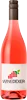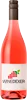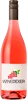
Winery MedivolRosé
 Pink wine



In the mouth this pink wine is a with a nice freshness.
This wine generally goes well with vegetarian, appetizers and snacks or lean fish.
Taste structure of the Rosé from the Winery Medivol
Light | Bold | |
Dry | Sweet | |
Soft | Acidic |
In the mouth the Rosé of Winery Medivol in the region of Languedoc-Roussillon is a with a nice freshness.
Food and wine pairings with Rosé
Pairings that work perfectly with Rosé



Original food and wine pairings with Rosé


The Rosé of Winery Medivol matches generally quite well with dishes of pasta, vegetarian or appetizers and snacks such as recipes of generous flaky quiche, leek, goat cheese and bacon quiche or autumn verrine.
Details and technical informations about Winery Medivol's Rosé.
Discover the grape variety: Cabernet-Cantor
Interspecific crossing between Chancellor and Solaris made in 1989 by Norbert Becker of the Freiburg Research Institute in Germany. Cabernet-Cantor can be found in Germany, Switzerland, the Netherlands, Belgium, Lithuania, Poland, ... little known in France.
Informations about the Winery Medivol
The Winery Medivol is one of of the world's greatest estates. It offers 3 wines for sale in the of Pic-Saint-Loup to come and discover on site or to buy online.

The wine region of Pic-Saint-Loup
The wine region of Pic-Saint-Loup is located in the region of Languedoc of Languedoc-Roussillon of France. Wineries and vineyards like the Domaine Ermitage du Pic Saint Loup or the Domaine de Villeneuve produce mainly wines red, pink and white. The most planted grape varieties in the region of Pic-Saint-Loup are Mourvèdre, Roussanne and Viognier, they are then used in wines in blends or as a single variety. On the nose of Pic-Saint-Loup often reveals types of flavors of earth, straw or apricot and sometimes also flavors of peach, dark chocolate or anise.
The wine region of Languedoc-Roussillon
Languedoc (formerly Coteaux du Languedoc) is a key appellation used in the Languedoc-Roussillon wine region of southern France. It covers Dry table wines of all three colors (red, white and rosé) from the entire region, but leaves Sweet and Sparkling wines to other more specialized appellations. About 75% of all Languedoc wines are red, with the remaining 25% split roughly down the middle between whites and rosés. The appellation covers most of the Languedoc region and almost a third of all the vineyards in France.
The word of the wine: Chaptalization
The addition of sugar at the time of fermentation of the must, an ancient practice, but theorized by Jean-Antoine Chaptal at the dawn of the 19th century. The sugar is transformed into alcohol and allows the natural degree of the wine to be raised in a weak or cold year, or - more questionably - when the winegrower has a harvest that is too large to obtain good maturity.