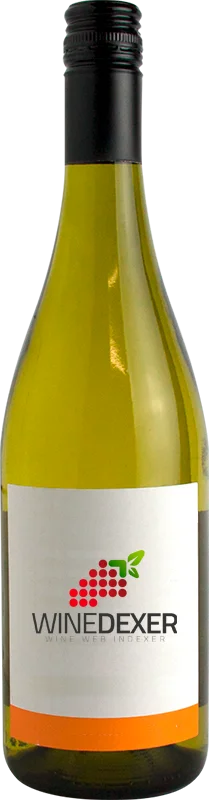
Winery MaybachLiebfraumilch
 White wine



This wine is a blend of 2 varietals which are the Kerner and the Riesling.
This wine generally goes well with pork, vegetarian or poultry.
Food and wine pairings with Liebfraumilch
Pairings that work perfectly with Liebfraumilch



Original food and wine pairings with Liebfraumilch



The Liebfraumilch of Winery Maybach matches generally quite well with dishes of pork, rich fish (salmon, tuna etc) or shellfish such as recipes of pork chops with curry and honey, spaghetti with tuna (real italian recipe) or scallops on a bed of leeks.
Details and technical informations about Winery Maybach's Liebfraumilch.
Discover the grape variety: Kerner
Intraspecific crossing between frankenthal and riesling obtained in Germany in 1929 by August Karl Herold (1902/1973). In 1951 and by crossing it with the sylvaner, we obtained the juwel. It should be noted that there is a mutation of Kerner, discovered in 1974 and bearing the name of kernling, with grapes of pink-grey to red-grey colour at full maturity. Kerner can be found in Germany, Belgium, Slovenia, Austria, Switzerland, Italy, South Africa, Australia, the United States, Canada, Japan... practically unknown in France except in a few Moselle vineyards.
Last vintages of this wine
The best vintages of Liebfraumilch from Winery Maybach are 0
Informations about the Winery Maybach
The Winery Maybach is one of of the world's great estates. It offers 17 wines for sale in the of Rheinhessen to come and discover on site or to buy online.

The wine region of Rheinhessen
Rheinhessen is Germany's largest region for producing the quality wines of the Qualitätswein bestimmter Anbaugebiete (QbA) and Prädikatswein designations, with roughly 26,500 hectares (65,000 acres) of Vineyard">Vineyards as of 2014. Many of its most significant viticultural areas are favorably influenced by the Rhine river, which runs aLong its North and eastern borders. The Rhine, along with the Nahe river to the west and the Haardt mountains to its South, form a natural border. Rheinhessen covers an area south of Rheingau, north of Pfalz and east of Nahe, and is located within the Rhineland-Palatinate federal state.
The word of the wine: Old vines
There are no specific regulations governing the term "vieilles vignes". After 20 to 25 years, the yields stabilize and tend to decrease, the vines are deeply rooted, and the grapes that come from them give richer, more concentrated, more sappy wines, expressing with more nuance the characteristics of their terroir. It is possible to find plots of vines that claim to be a century old.