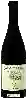
Winery Marco PauloCuvée Madeline
 Red wine
In the mouth this red wine is a powerful with a nice balance between acidity and tannins.
This wine generally goes well with beef, veal or pasta.

Taste structure of the Cuvée Madeline from the Winery Marco Paulo
Light | Bold | |
Smooth | Tannic | |
Dry | Sweet | |
Soft | Acidic |
In the mouth the Cuvée Madeline of Winery Marco Paulo in the region of Languedoc-Roussillon is a powerful with a nice balance between acidity and tannins.
Food and wine pairings with Cuvée Madeline
Pairings that work perfectly with Cuvée Madeline



Original food and wine pairings with Cuvée Madeline
The Cuvée Madeline of Winery Marco Paulo matches generally quite well with dishes of beef, pasta or veal such as recipes of sloth pork loin, fried rice noodles with chicken or caramelized lamb mice.
Details and technical informations about Winery Marco Paulo's Cuvée Madeline.
Discover the grape variety: Bronner
Lively, fresh dry whites with a pale golden hue, a lean palate and preserved acidity, with delicate notes of citrus, green apple, pear, white flowers, pineapple and light muscat hints. Refreshing profile. Disease-resistant interspecific variety, a locomotive of northern organic vineyards: Germany, Italy (Trentino), Belgium, Netherlands, Denmark and the UK. German hybrid created in 1975 in Freiburg by Norbert Becker.
Informations about the Winery Marco Paulo
The Winery Marco Paulo is one of of the world's greatest estates. It offers 6 wines for sale in the of Languedoc-Roussillon to come and discover on site or to buy online.

The wine region of Languedoc-Roussillon
Largest single French vineyard, dominated by sunny, generous reds. Spicy Syrah, candied Grenache (ripe fruit, garrigue), structured Carignan, deep Mourvèdre, supple Cinsault. Stars: structured Corbières, Minervois, Faugères, Saint-Chinian; round Côtes-du-Roussillon. Legendary vins doux naturels: Banyuls and Maury (fortified Grenache) with notes of cocoa, fig, prune.
The word of the wine: Ample
Said of a generous wine with a rich body that gives an impression of fullness in the mouth.