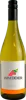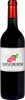
Château ManosBordeaux Sec
 White wine
This wine generally goes well with pork, vegetarian or poultry.
Food and wine pairings with Bordeaux Sec
Pairings that work perfectly with Bordeaux Sec



Original food and wine pairings with Bordeaux Sec


The Bordeaux Sec of Château Manos matches generally quite well with dishes of pork, vegetarian or poultry such as recipes of chicken ballotine with ham and mushrooms, cream and tuna quiche or butter chicken or chicken makkhani (india).
Details and technical informations about Château Manos's Bordeaux Sec.
Discover the grape variety: Beaunoir
A very old grape variety from the Aube department and the Châtillon sur Seine district in the Côte d'Or. It is said to be the descendant of a natural intraspecific crossing between pinot noir and gouais blanc. Today, it is almost absent in the vineyard.
Informations about the Château Manos
The Château Manos is one of of the world's greatest estates. It offers 5 wines for sale in the of Bordeaux Sec to come and discover on site or to buy online.

The wine region of Bordeaux Sec
All Dry white wines produced in Gironde can claim the regional appellation Bordeaux sec. The 1977 decree specifies that white wines with an Alcohol content of between 10 and 13° and a sugar content of less than 4g/l must be labelled as dry Bordeaux. The Bordeaux dry wine area covers 6,500 hectares and produces an average of 383,000 hl of wine per year. Its soils are clay-limestone, clay-siliceous, made up of gravel, sand and silt.
The wine region of Bordeaux
Bordeaux, in southwestern France, is one of the most famous, prestigious and prolific wine regions in the world. The majority of Bordeaux wines (nearly 90% of the production Volume) are the Dry, medium and Full-bodied red Bordeaux blends for which it is famous. The finest (and most expensive) are the wines of the great châteaux of Haut-Médoc and the right bank appellations of Saint-Émilion and Pomerol. The former focuses (at the highest level) on Cabernet Sauvignon, the latter on Merlot.
The word of the wine: Local wine
Table wine, but with the origin indicated. It corresponds to a particular legislation: the freedom to use grape varieties is greater than for the AOC, but the quality criteria such as the approval tastings can sometimes be more demanding. The legislation is still evolving, but for the moment there are three levels: regional (e.g. Vin de Pays d'Oc), departmental and local (e.g. Côtes de Thongue).